


How can light source controllers meet the unique lighting needs of various industries?
Release Time : 2025-11-24
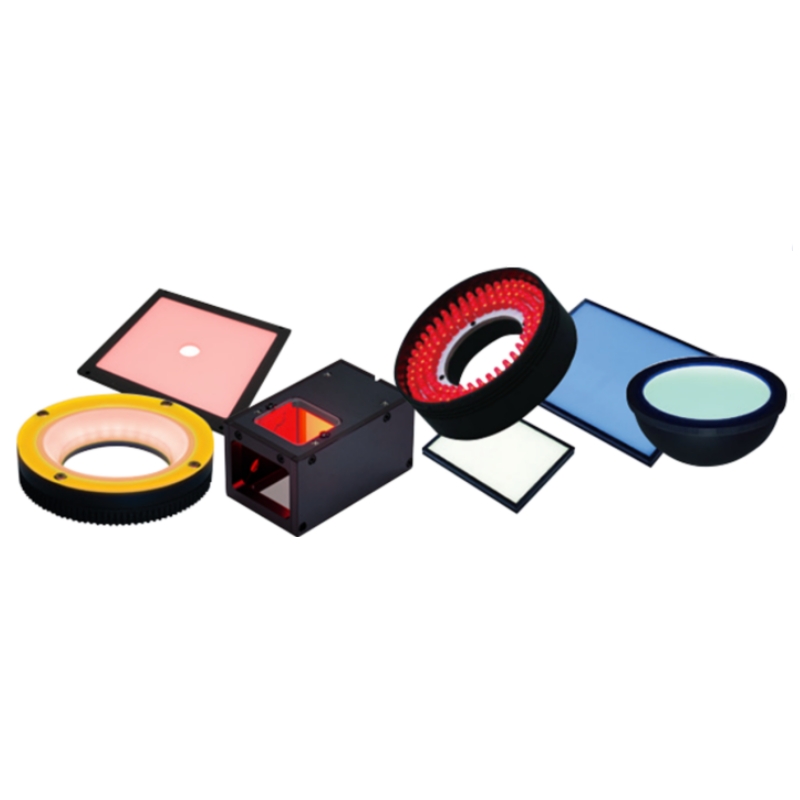
In diverse application scenarios such as smart manufacturing, precision testing, medical imaging, stage performances, and even agricultural lighting, lighting has long transcended its basic function of "illumination," evolving into a key variable affecting image quality, production efficiency, biological rhythms, and even product yield. As the "brain" of the lighting system, the light source controller is leaping from standardized equipment to highly customized and intelligent systems. Especially when faced with the differentiated demands of different industries regarding brightness, flicker, response speed, interface protocols, and even physical dimensions, general-purpose controllers often fall short. At this point, user-demand-oriented customized services become the core key to bridging the "last mile" between technology and application.
I. Core Technology Support: Dual Capabilities of Stepless Dimming and High-Speed Flicker
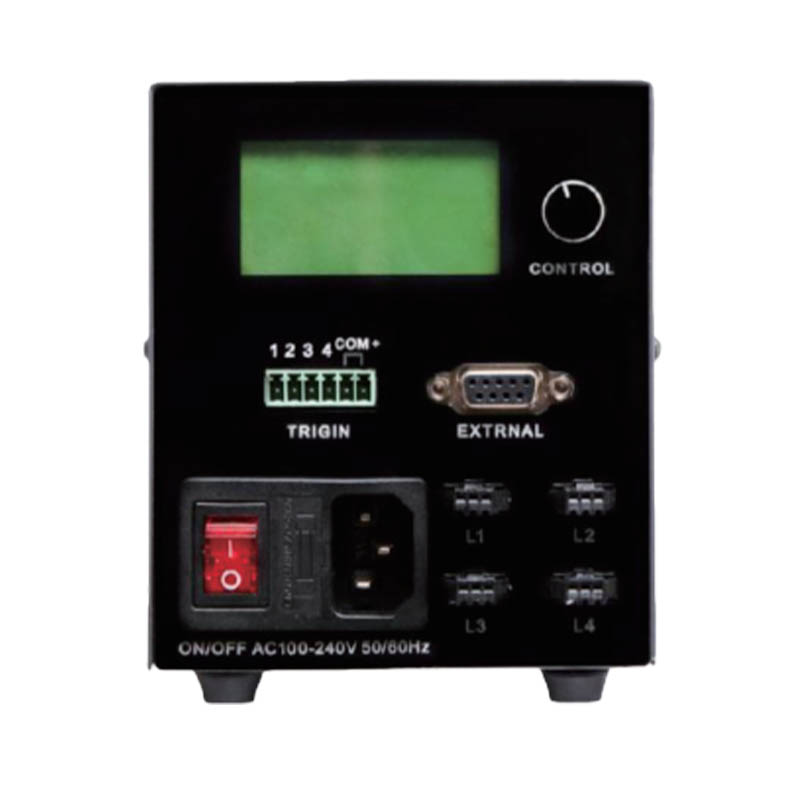
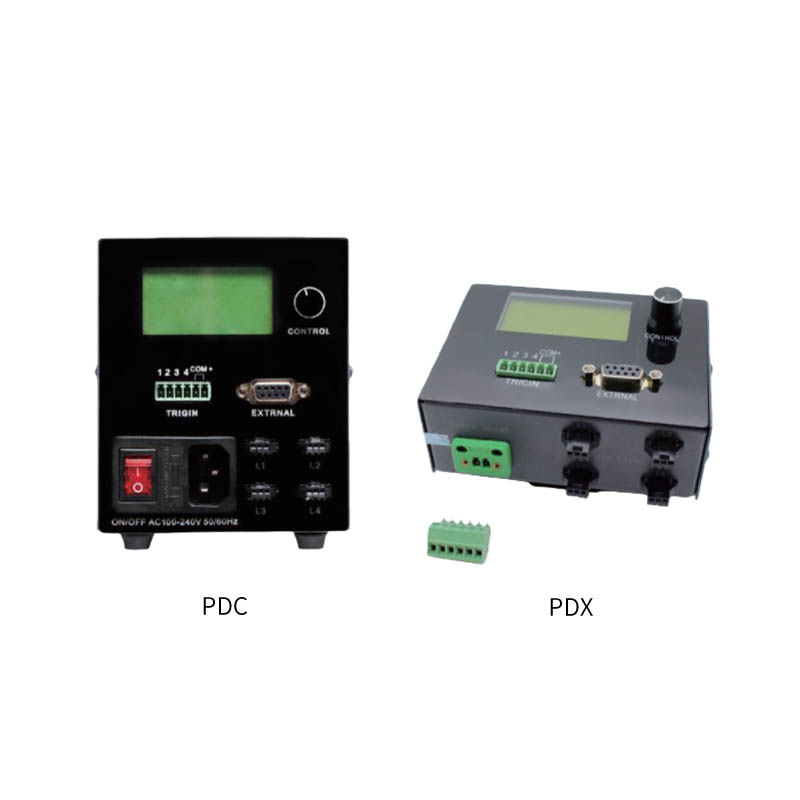
The core advantage of modern high-performance light source controllers lies in their ability to combine fine adjustment with extremely fast response. This product uses a potentiometer to control the output power, achieving stepless continuous dimming within the 0–100% range, avoiding the brightness jumps caused by traditional level adjustments, and ensuring smooth and stable light output. This characteristic is particularly crucial in machine vision inspection—for example, when inspecting defects on highly reflective metal surfaces, the light source intensity needs to be fine-tuned to eliminate glare; in biological microscopy, precise control of the light dose is required to protect living samples.
Furthermore, the controller incorporates a high-speed optical coupler, which not only achieves strong and weak current isolation and improves system safety, but also significantly enhances trigger response speed, supporting microsecond-level high-speed stroboscopic control. On high-speed production lines, cameras need to capture clear images in an extremely short time; at this point, the light source must be strictly synchronized with the camera shutter to "freeze" moving objects. High-speed stroboscopic control not only avoids motion blur but also significantly reduces average power consumption and heat accumulation, extending LED lifespan. This capability of "precise lighting + instantaneous illumination" is precisely the essential requirement for light source controllers in high-end industrial scenarios.
II. Diverse Industry Pain Points, Limited Solutions
Different industries have vastly different needs for light source control, far exceeding simple "on/off" or "bright/dim" requirements:
Machine vision: Requires independent multi-channel control, support for external TTL/RS485 triggering, and PWM dimming accuracy within ±1%;
Medical endoscope lighting: Requires ultra-low ripple, no electromagnetic interference, and compliance with medical safety regulations;
Stage performance lighting: Demands DMX512 protocol compatibility, smooth color gradations, and support for remote scene programming;
Plant factories: Requires automatic switching of spectrum and intensity according to diurnal rhythms, and support for closed-loop control of photosynthetically active radiation;
Scientific research experiments: May require nanosecond-level pulses, specific wavelength combinations, or linkage with lasers.
Faced with such fragmented needs, standardized products struggle to balance performance, cost, and adaptability. This is where light source controller suppliers who offer deep customization demonstrate their irreplaceable value.
III. Customized Service Dimensions: End-to-End Adaptation from Interface to Algorithm
True customized service goes far beyond simply replacing the casing or label; it involves a systematic reconstruction of hardware, software, and structure:
1. Hardware Interface Customization
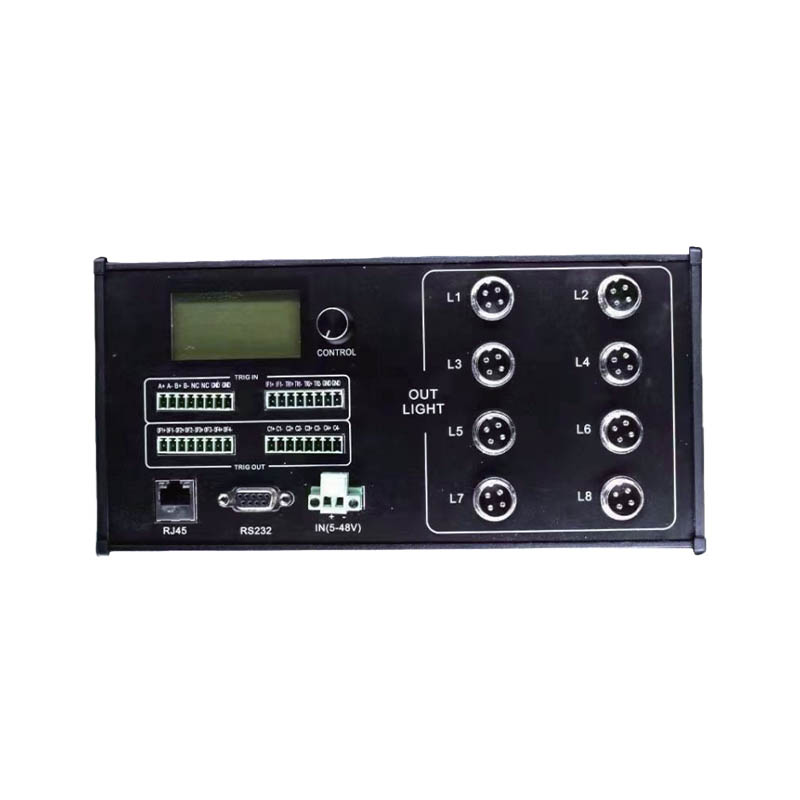
Based on the customer's device interface, we provide multiple communication protocol versions, including TTL, RS232, RS485, CAN, EtherNet/IP, and PROFINET; supporting analog or digital inputs; and integrating multiple independent output channels to control LED modules of different colors or positions.
2. Control Logic Customization
We develop proprietary control algorithms, such as "exposure synchronization mode," "pulse width adaptive adjustment," and "temperature-compensated dimming." For example, in high-temperature environments, we automatically reduce output power to prevent overheating while maintaining consistent visual brightness perception.
3. Structure and Protection Customization
For confined spaces, we design miniaturized PCBs and compact housings; for outdoor or industrial applications, we upgrade to IP65/IP67 protection ratings, using aluminum alloy heat sinks to ensure stable operation in dusty, humid, and vibrating environments.
4. Customized Human-Computer Interaction
We offer OLED screen displays, knob + button combinations, and remote control interfaces via mobile apps or web interfaces to meet different operating habits. Some clients even request embedded brand logos or specific UI styles to enhance product consistency.

IV. Success Stories Demonstrating: How Customization Creates Real Value
A semiconductor packaging company faced a problem with blurry wafer alignment images. Analysis revealed that the original light source controller had a response latency of 5ms, making it unsuitable for high-speed cameras. By customizing a controller with integrated FPGA, the trigger latency was compressed to below 50μs, and a pre-trigger buffer mechanism was added, ultimately achieving 100% clear imaging and improving yield by 3.2%.
Another plant lighting manufacturer needed a system that could simulate seasonal light changes. The supplier developed a controller with a real-time clock and SD card storage, allowing for preset annual light cycle curves and dynamic adjustments via light sensor feedback, shortening the lettuce growth cycle by 12% and reducing energy consumption by 18%.
These cases demonstrate that customization is not a cost burden, but a value investment—it transforms general-purpose technology into a powerful tool for solving specific problems, directly driving customer business growth.
V. Future Trends: Modular Platforms + Flexible Customization
To balance customization efficiency and development costs, leading manufacturers are building modular controller platforms: basic boards integrate common modules such as power management, optocoupler isolation, and main control MCUs, while peripherals expand communication, sensing, and display functions through "plug-and-play" daughterboards. Customers only need to select the required module combinations to quickly generate customized solutions, significantly shortening delivery cycles.
Simultaneously, combined with cloud platforms and AI algorithms, future controllers will also possess self-learning capabilities—automatically identifying optimal lighting parameters and optimizing control strategies, allowing "customization" to evolve from static configuration to dynamic evolution.
Though small, the light source controller is the hub connecting light and intelligence. In the process of various industries moving towards refinement, automation, and green practices, only by breaking away from the "one-size-fits-all" product mindset and embracing customized needs with an open architecture can the true potential of lighting be unleashed. Through core technologies such as potentiometer-based stepless dimming and high-speed optocoupler flicker, coupled with multi-model, multi-component, and deeply customized service capabilities, modern light source controllers are transforming from "tools" into "solutions," illuminating unique scenarios with personalized light. This is not only a technological advancement, but also a profound practice of the user-centric philosophy—because the best control is the invisible control; the most ideal light source is the just-right beam of light.
I. Core Technology Support: Dual Capabilities of Stepless Dimming and High-Speed Flicker
The core advantage of modern high-performance light source controllers lies in their ability to combine fine adjustment with extremely fast response. This product uses a potentiometer to control the output power, achieving stepless continuous dimming within the 0–100% range, avoiding the brightness jumps caused by traditional level adjustments, and ensuring smooth and stable light output. This characteristic is particularly crucial in machine vision inspection—for example, when inspecting defects on highly reflective metal surfaces, the light source intensity needs to be fine-tuned to eliminate glare; in biological microscopy, precise control of the light dose is required to protect living samples.
Furthermore, the controller incorporates a high-speed optical coupler, which not only achieves strong and weak current isolation and improves system safety, but also significantly enhances trigger response speed, supporting microsecond-level high-speed stroboscopic control. On high-speed production lines, cameras need to capture clear images in an extremely short time; at this point, the light source must be strictly synchronized with the camera shutter to "freeze" moving objects. High-speed stroboscopic control not only avoids motion blur but also significantly reduces average power consumption and heat accumulation, extending LED lifespan. This capability of "precise lighting + instantaneous illumination" is precisely the essential requirement for light source controllers in high-end industrial scenarios.
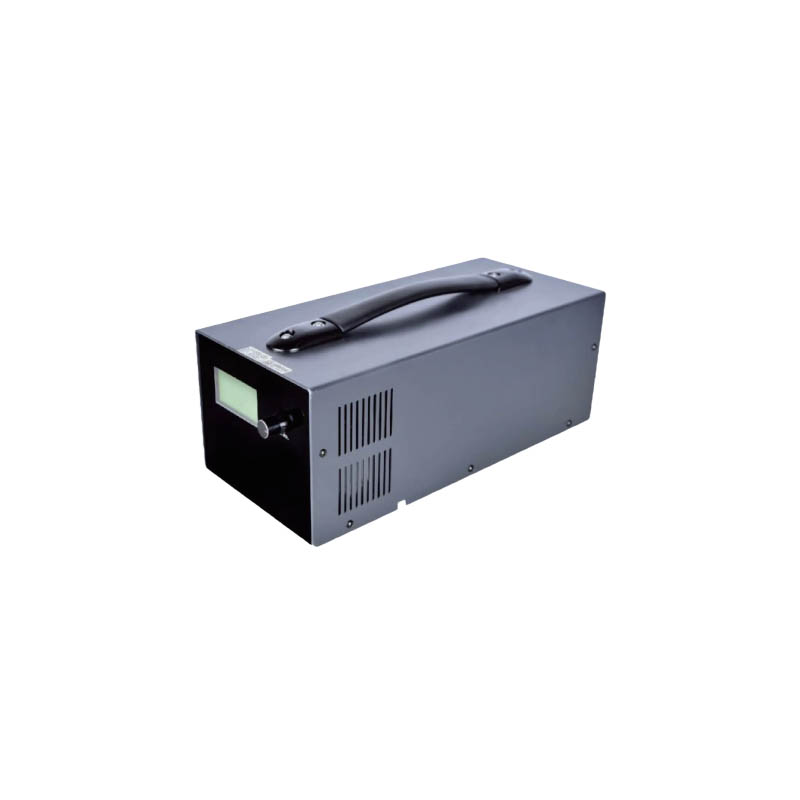
II. Diverse Industry Pain Points, Limited Solutions
Different industries have vastly different needs for light source control, far exceeding simple "on/off" or "bright/dim" requirements:
Machine vision: Requires independent multi-channel control, support for external TTL/RS485 triggering, and PWM dimming accuracy within ±1%;
Medical endoscope lighting: Requires ultra-low ripple, no electromagnetic interference, and compliance with medical safety regulations;
Stage performance lighting: Demands DMX512 protocol compatibility, smooth color gradations, and support for remote scene programming;
Plant factories: Requires automatic switching of spectrum and intensity according to diurnal rhythms, and support for closed-loop control of photosynthetically active radiation;
Scientific research experiments: May require nanosecond-level pulses, specific wavelength combinations, or linkage with lasers.
Faced with such fragmented needs, standardized products struggle to balance performance, cost, and adaptability. This is where light source controller suppliers who offer deep customization demonstrate their irreplaceable value.
III. Customized Service Dimensions: End-to-End Adaptation from Interface to Algorithm
True customized service goes far beyond simply replacing the casing or label; it involves a systematic reconstruction of hardware, software, and structure:
1. Hardware Interface Customization
Based on the customer's device interface, we provide multiple communication protocol versions, including TTL, RS232, RS485, CAN, EtherNet/IP, and PROFINET; supporting analog or digital inputs; and integrating multiple independent output channels to control LED modules of different colors or positions.
2. Control Logic Customization
We develop proprietary control algorithms, such as "exposure synchronization mode," "pulse width adaptive adjustment," and "temperature-compensated dimming." For example, in high-temperature environments, we automatically reduce output power to prevent overheating while maintaining consistent visual brightness perception.
3. Structure and Protection Customization
For confined spaces, we design miniaturized PCBs and compact housings; for outdoor or industrial applications, we upgrade to IP65/IP67 protection ratings, using aluminum alloy heat sinks to ensure stable operation in dusty, humid, and vibrating environments.
4. Customized Human-Computer Interaction
We offer OLED screen displays, knob + button combinations, and remote control interfaces via mobile apps or web interfaces to meet different operating habits. Some clients even request embedded brand logos or specific UI styles to enhance product consistency.
IV. Success Stories Demonstrating: How Customization Creates Real Value
A semiconductor packaging company faced a problem with blurry wafer alignment images. Analysis revealed that the original light source controller had a response latency of 5ms, making it unsuitable for high-speed cameras. By customizing a controller with integrated FPGA, the trigger latency was compressed to below 50μs, and a pre-trigger buffer mechanism was added, ultimately achieving 100% clear imaging and improving yield by 3.2%.
Another plant lighting manufacturer needed a system that could simulate seasonal light changes. The supplier developed a controller with a real-time clock and SD card storage, allowing for preset annual light cycle curves and dynamic adjustments via light sensor feedback, shortening the lettuce growth cycle by 12% and reducing energy consumption by 18%.
These cases demonstrate that customization is not a cost burden, but a value investment—it transforms general-purpose technology into a powerful tool for solving specific problems, directly driving customer business growth.
V. Future Trends: Modular Platforms + Flexible Customization
To balance customization efficiency and development costs, leading manufacturers are building modular controller platforms: basic boards integrate common modules such as power management, optocoupler isolation, and main control MCUs, while peripherals expand communication, sensing, and display functions through "plug-and-play" daughterboards. Customers only need to select the required module combinations to quickly generate customized solutions, significantly shortening delivery cycles.
Simultaneously, combined with cloud platforms and AI algorithms, future controllers will also possess self-learning capabilities—automatically identifying optimal lighting parameters and optimizing control strategies, allowing "customization" to evolve from static configuration to dynamic evolution.
Though small, the light source controller is the hub connecting light and intelligence. In the process of various industries moving towards refinement, automation, and green practices, only by breaking away from the "one-size-fits-all" product mindset and embracing customized needs with an open architecture can the true potential of lighting be unleashed. Through core technologies such as potentiometer-based stepless dimming and high-speed optocoupler flicker, coupled with multi-model, multi-component, and deeply customized service capabilities, modern light source controllers are transforming from "tools" into "solutions," illuminating unique scenarios with personalized light. This is not only a technological advancement, but also a profound practice of the user-centric philosophy—because the best control is the invisible control; the most ideal light source is the just-right beam of light.