


How can machine vision light sources significantly improve the stability of image acquisition through highly uniform illumination?
Release Time : 2025-12-22
In modern intelligent manufacturing, precision inspection, and automated sorting systems, machine vision light sources have evolved from "auxiliary tools" to "core sensing organs." The key to the success or failure of a vision system often lies not in the camera or algorithm, but in the illumination—especially the uniformity of the light source. Uneven illumination introduces brightness gradients, local overexposure, or shadows into images, leading to distorted feature extraction, edge localization drift, and even misjudgments. Therefore, highly uniform illumination has become the cornerstone of industrial-grade machine vision light source systems.
The essence of machine vision light sources is to extract reliable and repeatable quantitative information from images. If the illumination itself has brightness fluctuations, even if the same workpiece is photographed multiple times at the same location, its pixel grayscale values will change due to differences in illumination, directly compromising the repeatability and stability of the detection. For example, when measuring the diameter of metal parts, if the edges are blurred due to insufficient lighting, sub-pixel edge localization algorithms will produce millimeter-level deviations. In surface defect detection, localized highlights may be misidentified as scratches, while dark areas may mask true defects.
Highly uniform illumination ensures that image grayscale reflects only the reflective properties of the object itself, rather than interference from the light source, by providing a consistent illuminance distribution across the entire field of view. This is equivalent to adding an "optical preprocessing filter" to the vision system, suppressing noise at its source and significantly improving the robustness of subsequent algorithms.
2. High-Density LED Chips: The Hardware Foundation for Uniformity
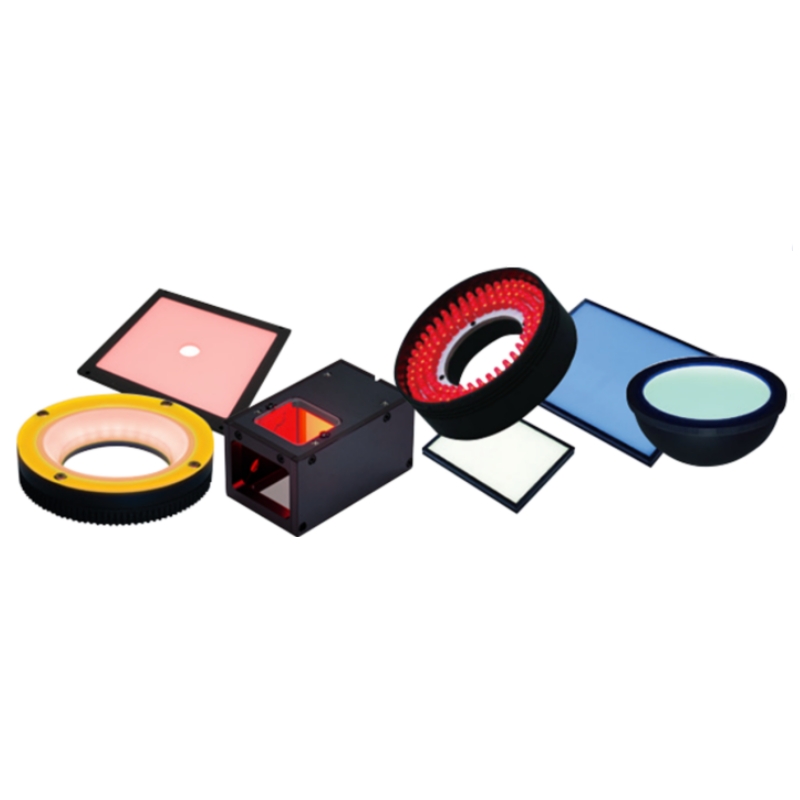
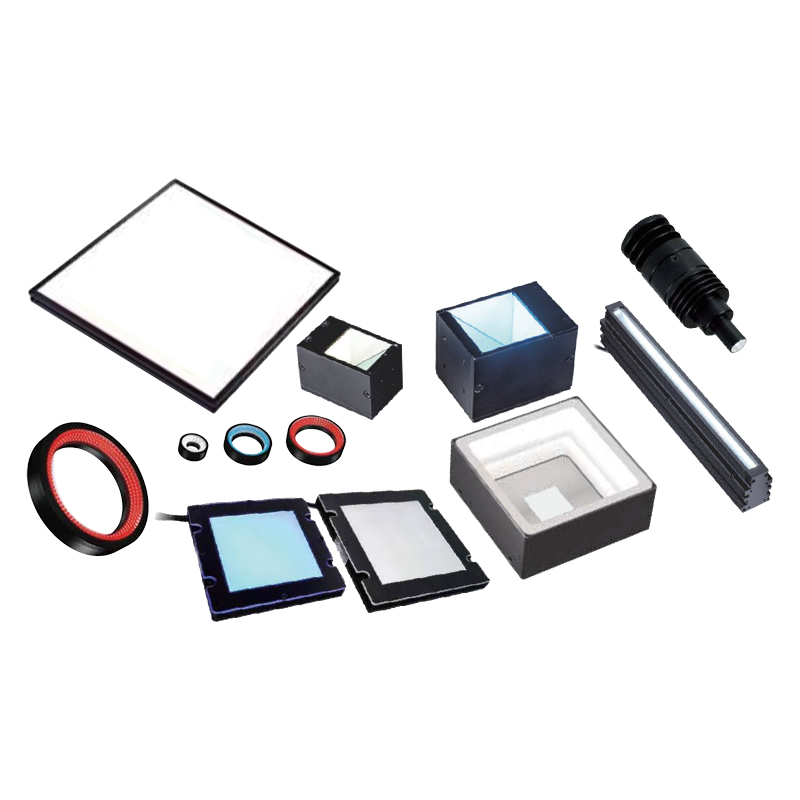
Traditional LED light sources, due to their large chip spacing and small number of chips, easily form "spots" or "stripes" on the illuminated surface. Modern high-performance machine vision light sources generally employ high-density LED arrays—integrating dozens or even hundreds of tiny LED chips within a limited area. Through close arrangement and staggered layout, the light fields of each emitting point are superimposed and smoothly transitioned.
This design offers three advantages:
Higher brightness: Significantly increased luminous flux per unit area, meeting the needs of high-speed exposure or deep cavity illumination;
Continuous light field: The point source effect is weakened, creating a softer output similar to a surface light source;
Even heat distribution: More uniform heat distribution avoids inconsistent light decay caused by localized overheating.
For example, in a ring light source, high-density LEDs can eliminate the graininess of traditional "visible LED beads," producing uniform illumination like a milky white light curtain across the entire ring surface, particularly suitable for glare-free imaging of reflective objects.
3. Diffuser: The "Last Mile" of Optical Homogenization Refinement
Even with high-density LEDs, light propagation may still produce slight unevenness due to differences in lens focusing and reflection angles. In this case, an optional optical diffuser becomes a key "refinement tool" for improving uniformity.
The diffuser disperses and reassembles direct light through scattering, refraction, and diffuse reflection mechanisms, further smoothing out brightness gradients. Experiments show that without a diffuser, the illuminance ratio between the center and edge of a backlight source can reach 1.5:1; with a custom diffuser, this ratio can be optimized to within 1.05:1, achieving a uniformity exceeding 95%. Diffusers are almost standard equipment, especially in applications with stringent requirements for grayscale consistency, such as high-precision dimensional measurement and OCR character recognition.
It is worth noting that a diffuser is not simply "fogging," but requires optical simulation customization based on working distance, field of view, and wavelength characteristics. A high-quality diffuser improves uniformity while minimizing light intensity loss and resolution degradation, achieving "uniformity without blurring."
4. System-level Collaboration: A Stable Closed Loop from Light Source to Image
The value of highly uniform illumination ultimately lies in the long-term stability of image acquisition. On a production line operating continuously 24/7, stable illumination means:
Highly consistent grayscale distribution of images from the same batch of products, reducing the false rejection rate;
Comparable detection results across different shifts and seasons;
No need for frequent recalibration or threshold adjustments to the vision system.
Furthermore, a highly uniform light source reduces the dynamic adjustment range of camera gain and exposure time, avoiding additional noise introduced by parameter jumps. When the light source, lens, and camera are well-matched, the entire vision system enters a steady-state operation mode characterized by "low intervention and high reliability."
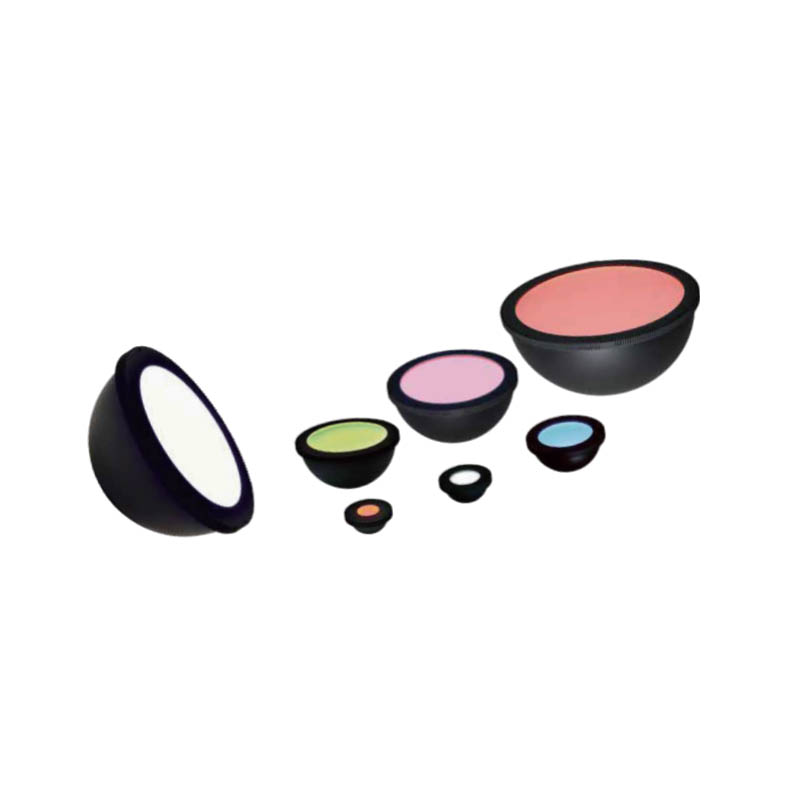
The high uniformity of the machine vision light source is not simply about "uniform brightness," but rather an engineering marvel that integrates hardware innovation with high-density LED chips, optical fine-tuning of the diffuser, and system integration. It acts like a silent stage lighting technician, neither stealing the spotlight nor showing off, yet ensuring that every "actor" appears in front of the camera with the most authentic and consistent demeanor.
The essence of machine vision light sources is to extract reliable and repeatable quantitative information from images. If the illumination itself has brightness fluctuations, even if the same workpiece is photographed multiple times at the same location, its pixel grayscale values will change due to differences in illumination, directly compromising the repeatability and stability of the detection. For example, when measuring the diameter of metal parts, if the edges are blurred due to insufficient lighting, sub-pixel edge localization algorithms will produce millimeter-level deviations. In surface defect detection, localized highlights may be misidentified as scratches, while dark areas may mask true defects.
Highly uniform illumination ensures that image grayscale reflects only the reflective properties of the object itself, rather than interference from the light source, by providing a consistent illuminance distribution across the entire field of view. This is equivalent to adding an "optical preprocessing filter" to the vision system, suppressing noise at its source and significantly improving the robustness of subsequent algorithms.
2. High-Density LED Chips: The Hardware Foundation for Uniformity
Traditional LED light sources, due to their large chip spacing and small number of chips, easily form "spots" or "stripes" on the illuminated surface. Modern high-performance machine vision light sources generally employ high-density LED arrays—integrating dozens or even hundreds of tiny LED chips within a limited area. Through close arrangement and staggered layout, the light fields of each emitting point are superimposed and smoothly transitioned.
This design offers three advantages:
Higher brightness: Significantly increased luminous flux per unit area, meeting the needs of high-speed exposure or deep cavity illumination;
Continuous light field: The point source effect is weakened, creating a softer output similar to a surface light source;
Even heat distribution: More uniform heat distribution avoids inconsistent light decay caused by localized overheating.
For example, in a ring light source, high-density LEDs can eliminate the graininess of traditional "visible LED beads," producing uniform illumination like a milky white light curtain across the entire ring surface, particularly suitable for glare-free imaging of reflective objects.
3. Diffuser: The "Last Mile" of Optical Homogenization Refinement
Even with high-density LEDs, light propagation may still produce slight unevenness due to differences in lens focusing and reflection angles. In this case, an optional optical diffuser becomes a key "refinement tool" for improving uniformity.
The diffuser disperses and reassembles direct light through scattering, refraction, and diffuse reflection mechanisms, further smoothing out brightness gradients. Experiments show that without a diffuser, the illuminance ratio between the center and edge of a backlight source can reach 1.5:1; with a custom diffuser, this ratio can be optimized to within 1.05:1, achieving a uniformity exceeding 95%. Diffusers are almost standard equipment, especially in applications with stringent requirements for grayscale consistency, such as high-precision dimensional measurement and OCR character recognition.
It is worth noting that a diffuser is not simply "fogging," but requires optical simulation customization based on working distance, field of view, and wavelength characteristics. A high-quality diffuser improves uniformity while minimizing light intensity loss and resolution degradation, achieving "uniformity without blurring."
4. System-level Collaboration: A Stable Closed Loop from Light Source to Image
The value of highly uniform illumination ultimately lies in the long-term stability of image acquisition. On a production line operating continuously 24/7, stable illumination means:
Highly consistent grayscale distribution of images from the same batch of products, reducing the false rejection rate;
Comparable detection results across different shifts and seasons;
No need for frequent recalibration or threshold adjustments to the vision system.
Furthermore, a highly uniform light source reduces the dynamic adjustment range of camera gain and exposure time, avoiding additional noise introduced by parameter jumps. When the light source, lens, and camera are well-matched, the entire vision system enters a steady-state operation mode characterized by "low intervention and high reliability."
The high uniformity of the machine vision light source is not simply about "uniform brightness," but rather an engineering marvel that integrates hardware innovation with high-density LED chips, optical fine-tuning of the diffuser, and system integration. It acts like a silent stage lighting technician, neither stealing the spotlight nor showing off, yet ensuring that every "actor" appears in front of the camera with the most authentic and consistent demeanor.