


How do light source controllers achieve linearity and stability in light source output power, avoiding brightness jumps or drift?
Release Time : 2026-02-17
In applications with stringent lighting requirements, such as machine vision, industrial inspection, medical lighting, and high-end photography, the brightness of the light source not only needs to be "adjustable" but also "precise, stable, and reliable." Through precise analog circuit design, closed-loop feedback mechanisms, and high-quality component selection, light source controllers successfully achieve true stepless dimming and effectively suppress brightness jumps, temperature drift, or output drift during long-term use. Combined with potentiometer adjustment, external trigger flicker, and flexible installation methods, these controllers have become the core of high-stability lighting systems.
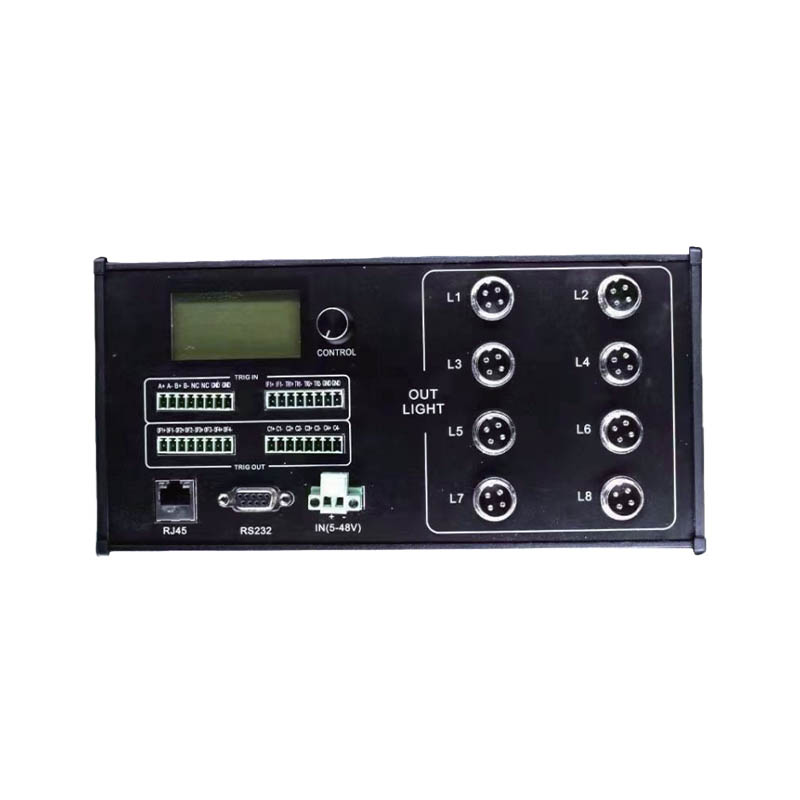
1. High-Resolution Analog Dimming: Achieving Truly Stepless Smooth Adjustment
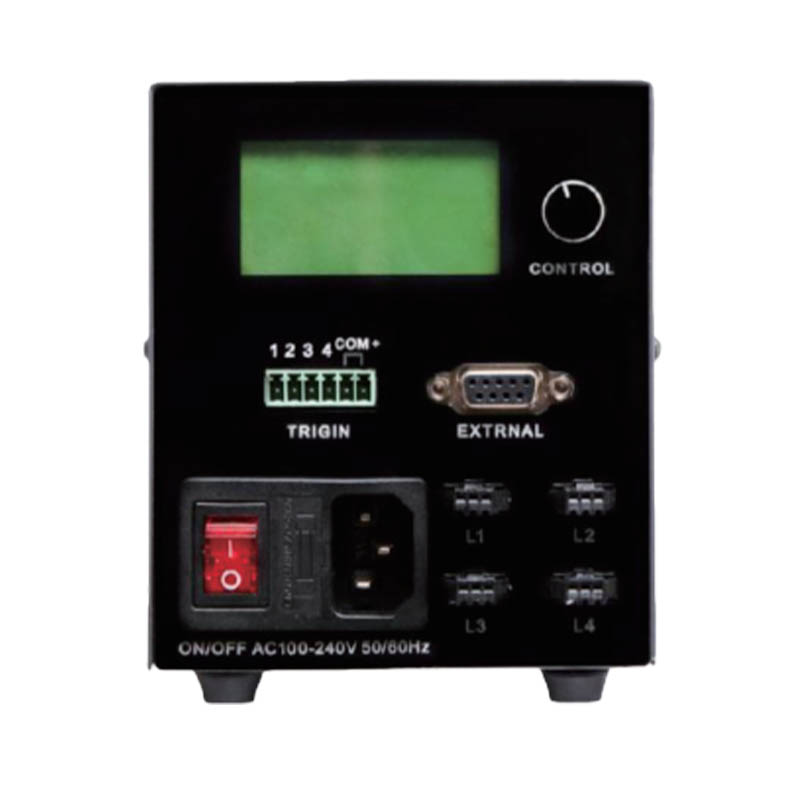
Light source controllers commonly use high-precision multi-turn potentiometers or digital potentiometers as the user input interface, with adjustment resolution reaching 0.1% or even higher. Unlike simple PWM duty cycle coarse adjustment, high-quality controllers employ constant current fine-tuning technology in the low-frequency range to avoid nonlinear LED response caused by excessively narrow pulses. Meanwhile, the internal signal conditioning circuit filters and linearizes the potentiometer output, eliminating mechanical contact noise and nonlinear inflection points, ensuring a highly linear relationship between knob rotation and brightness changes—whether from 1% to 5% or 80% to 90%, every degree of adjustment brings predictable, non-jumping changes in light output.
2. Closed-Loop Constant Current Drive: Suppressing Power Supply Fluctuations and Device Aging Effects
The main causes of brightness drift are power supply voltage fluctuations, changes in LED forward voltage drop with temperature, and light decay of the light source itself. High-end light source controllers employ a closed-loop constant current drive architecture: output current is monitored in real-time through a high-precision sampling resistor, and the signal is fed back to the control chip to dynamically adjust the MOSFET conduction state, keeping the current constant at the set value. Even if the input voltage fluctuates within ±10%, or Vf rises due to increased LED junction temperature, the output current remains stable within ±0.5%. Some models also integrate a temperature sensor, automatically reducing the current slightly at high temperatures to protect the LED while maintaining visual brightness consistency, avoiding "dimming over time" or "uneven heating/cooling."
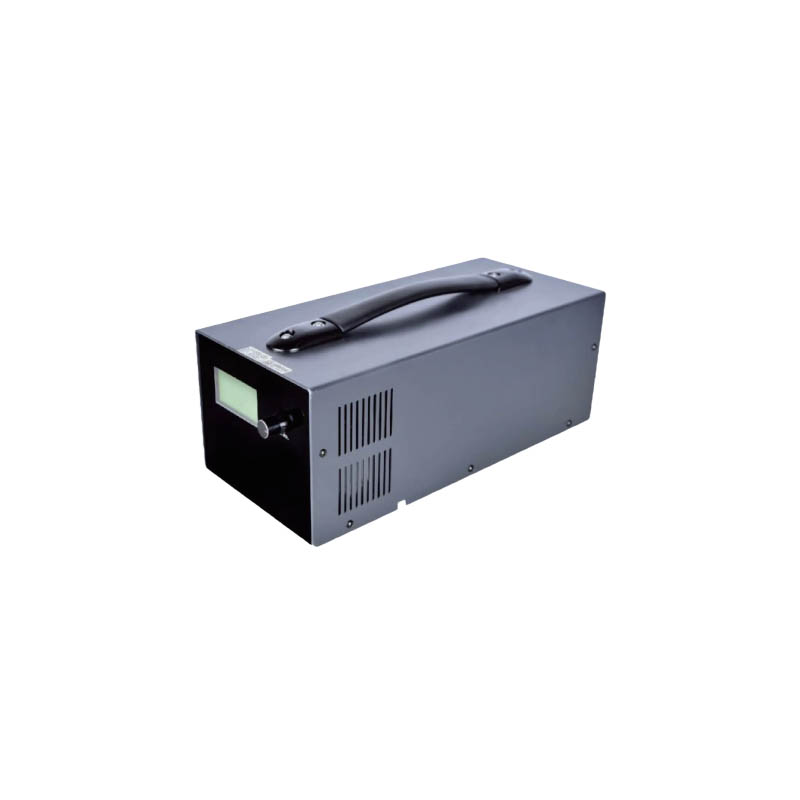
3. Transient Stability in External Triggering and Strobe Mode
When using external TTL/PLC triggering for high-speed strobe, the controller must complete the start-stop switching within microseconds. To avoid current overshoot or undershoot during strobe, the advanced design employs soft-start ramp control and a pre-bias circuit. For example, before the trigger signal arrives, the LED is maintained in an extremely low bias current state to ensure no delay during startup; when shutting down, parasitic inductance energy is quickly discharged to prevent back EMF damage to the device. Simultaneously, the strobe frequency and duty cycle are independent of the main dimming potentiometer and managed by a dedicated logic circuit, avoiding interference from dimming settings with the trigger timing and ensuring consistent brightness for each flash, meeting the synchronous shooting requirements of high-speed cameras.
4. Structural and Thermal Design: Ensuring Long-Term Reliability
The stability of the controller depends not only on the circuitry but also on its physical structure. Optional rail clips or panel mounting holes facilitate mounting in an electrical cabinet away from heat sources and vibration areas. Key internal components utilize low-temperature coefficient materials and are located in well-ventilated areas. Some industrial-grade products are also potted with thermally conductive silicone, which improves shock resistance and accelerates heat conduction, preventing parameter drift caused by localized temperature rise. Furthermore, the power input is equipped with a TVS diode and a common-mode choke to effectively suppress surges and EMI interference in industrial environments, avoiding false triggering or output fluctuations.

In summary, the light source controller, through its high-linearity dimming interface, closed-loop constant current drive, intelligent flicker management, and robust structural design, constructs a stable end-to-end system from user operation to light source output. It not only achieves the convenience of "stepless adjustment" but also ensures professional-grade performance of "what you adjust is what you get, and it remains as good as new even after long-term use," providing a solid and reliable light control foundation for high-precision vision and lighting applications.