


How can automatic dispensing machines achieve high-precision path control and trajectory stability on complex curved workpieces?
Release Time : 2026-05-09
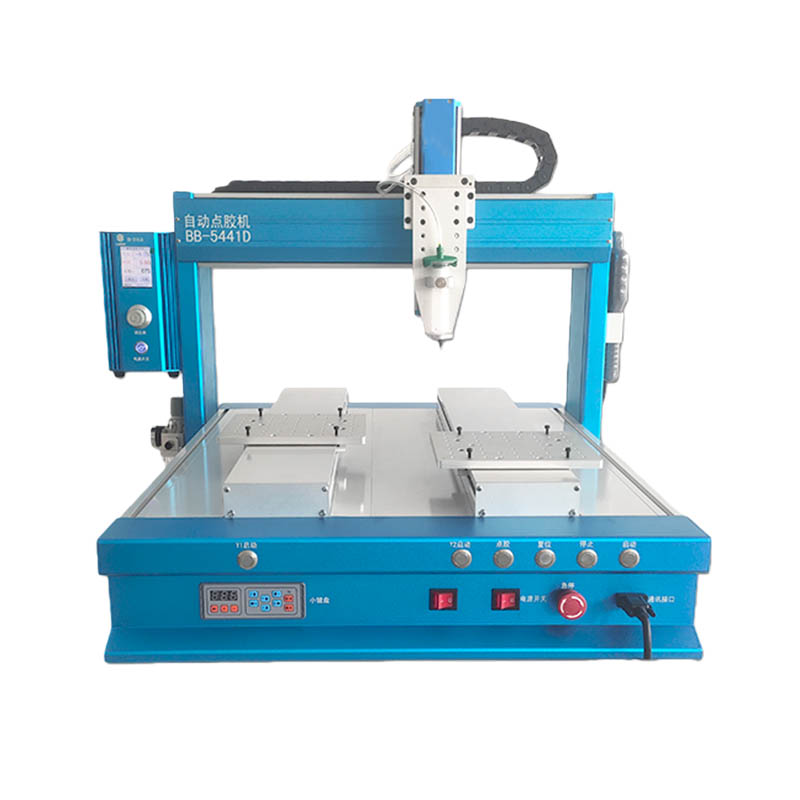
In modern precision manufacturing and automated assembly, dispensing has become a crucial step in the production of electronics, automobiles, new energy, and consumer electronics products. Automatic dispensing machines, in particular, need to maintain high-precision path control and stable trajectory output during multi-dimensional spatial motion when dealing with complex curved workpieces. This places high demands on the machine's mechanical structure, control system, and algorithm capabilities.
1. High-Precision Multi-Axis Motion System as the Foundation
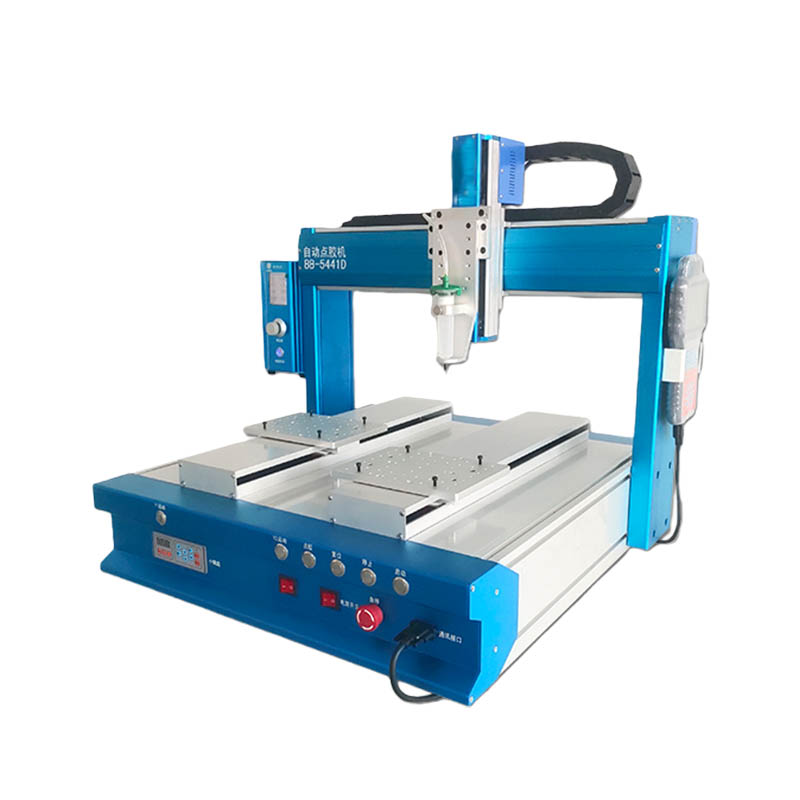
Automatic dispensing machines typically employ a multi-axis linkage structure, achieving free spatial motion through high-rigidity guide rails and servo drive systems. When dispensing on complex curved workpieces, the multi-axis system needs to coordinate the position and speed of each axis in real time, ensuring that the dispensing nozzle always maintains consistency with the workpiece surface normal or a set angle. This high-precision synchronous control is the fundamental condition for achieving stable trajectory output.
2. Surface Modeling and Path Planning Optimize Trajectory Generation
During the dispensing process on complex curved surfaces, the system first needs to acquire workpiece surface data through 3D scanning or CAD models, and then perform surface reconstruction and path planning. By discretizing a continuous curved surface into high-density trajectory points, the dispensing machine can generate a motion path for the surface to be bonded. Simultaneously, the path planning algorithm smooths the trajectory, reducing sharp turns or abrupt changes, thus ensuring motion continuity and glue line uniformity.
3. Real-time Dynamic Compensation Improves Trajectory Stability
During actual operation, slight deviations in the dispensing trajectory may occur due to mechanical errors, load variations, or environmental factors. The 3D dispensing machine introduces a real-time dynamic compensation system, using sensor feedback to correct positional errors in real time. For example, the Z-axis height is fine-tuned during movement to ensure the nozzle maintains the optimal distance from the curved surface, thereby ensuring consistency in glue line thickness and width.
4. High-Speed Motion Control and Acceleration/Deceleration Optimization
In high-speed dispensing, acceleration and deceleration control have a significant impact on trajectory stability. Excessive acceleration can easily lead to inertial deviation; improper deceleration may cause glue dot accumulation or stringing. Therefore, by optimizing the motion control algorithm, enabling smooth acceleration and deceleration transitions in path change areas, trajectory stability and dispensing quality can be effectively improved.
5. Synergistic Effect of Automatic Track Correction and Intelligent Control System
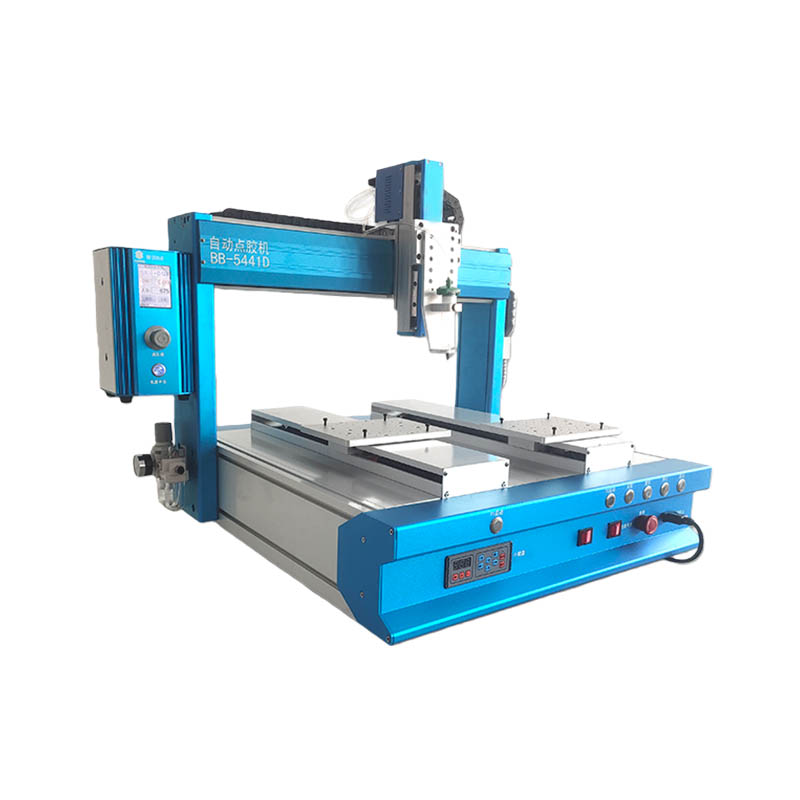
Modern 3D dispensing machines are typically equipped with an automatic track correction and intelligent control system that monitors the dispensing position in real time through visual recognition or sensor feedback. When a trajectory deviation or abnormal glue volume is detected, the system can automatically adjust the motion path or dispensing parameters to achieve closed-loop control. This intelligent adjustment mechanism enables the equipment to maintain high consistency output even in complex curved surface environments.
In summary, the high-precision path control and trajectory stability achieved by automatic dispensing machines on complex curved workpieces rely on the synergistic effect of multiple technologies, including multi-axis motion systems, curved surface path planning, real-time dynamic compensation, high-speed motion optimization, and intelligent feedback control. This comprehensive control system enables it to meet the stringent requirements of precision dispensing processes in high-end manufacturing fields.
1. High-Precision Multi-Axis Motion System as the Foundation
Automatic dispensing machines typically employ a multi-axis linkage structure, achieving free spatial motion through high-rigidity guide rails and servo drive systems. When dispensing on complex curved workpieces, the multi-axis system needs to coordinate the position and speed of each axis in real time, ensuring that the dispensing nozzle always maintains consistency with the workpiece surface normal or a set angle. This high-precision synchronous control is the fundamental condition for achieving stable trajectory output.
2. Surface Modeling and Path Planning Optimize Trajectory Generation
During the dispensing process on complex curved surfaces, the system first needs to acquire workpiece surface data through 3D scanning or CAD models, and then perform surface reconstruction and path planning. By discretizing a continuous curved surface into high-density trajectory points, the dispensing machine can generate a motion path for the surface to be bonded. Simultaneously, the path planning algorithm smooths the trajectory, reducing sharp turns or abrupt changes, thus ensuring motion continuity and glue line uniformity.
3. Real-time Dynamic Compensation Improves Trajectory Stability
During actual operation, slight deviations in the dispensing trajectory may occur due to mechanical errors, load variations, or environmental factors. The 3D dispensing machine introduces a real-time dynamic compensation system, using sensor feedback to correct positional errors in real time. For example, the Z-axis height is fine-tuned during movement to ensure the nozzle maintains the optimal distance from the curved surface, thereby ensuring consistency in glue line thickness and width.
4. High-Speed Motion Control and Acceleration/Deceleration Optimization
In high-speed dispensing, acceleration and deceleration control have a significant impact on trajectory stability. Excessive acceleration can easily lead to inertial deviation; improper deceleration may cause glue dot accumulation or stringing. Therefore, by optimizing the motion control algorithm, enabling smooth acceleration and deceleration transitions in path change areas, trajectory stability and dispensing quality can be effectively improved.
5. Synergistic Effect of Automatic Track Correction and Intelligent Control System
Modern 3D dispensing machines are typically equipped with an automatic track correction and intelligent control system that monitors the dispensing position in real time through visual recognition or sensor feedback. When a trajectory deviation or abnormal glue volume is detected, the system can automatically adjust the motion path or dispensing parameters to achieve closed-loop control. This intelligent adjustment mechanism enables the equipment to maintain high consistency output even in complex curved surface environments.
In summary, the high-precision path control and trajectory stability achieved by automatic dispensing machines on complex curved workpieces rely on the synergistic effect of multiple technologies, including multi-axis motion systems, curved surface path planning, real-time dynamic compensation, high-speed motion optimization, and intelligent feedback control. This comprehensive control system enables it to meet the stringent requirements of precision dispensing processes in high-end manufacturing fields.