


How to improve trigger synchronization accuracy and reduce signal delay in high-speed strobe mode for light source controllers?
Release Time : 2026-05-18
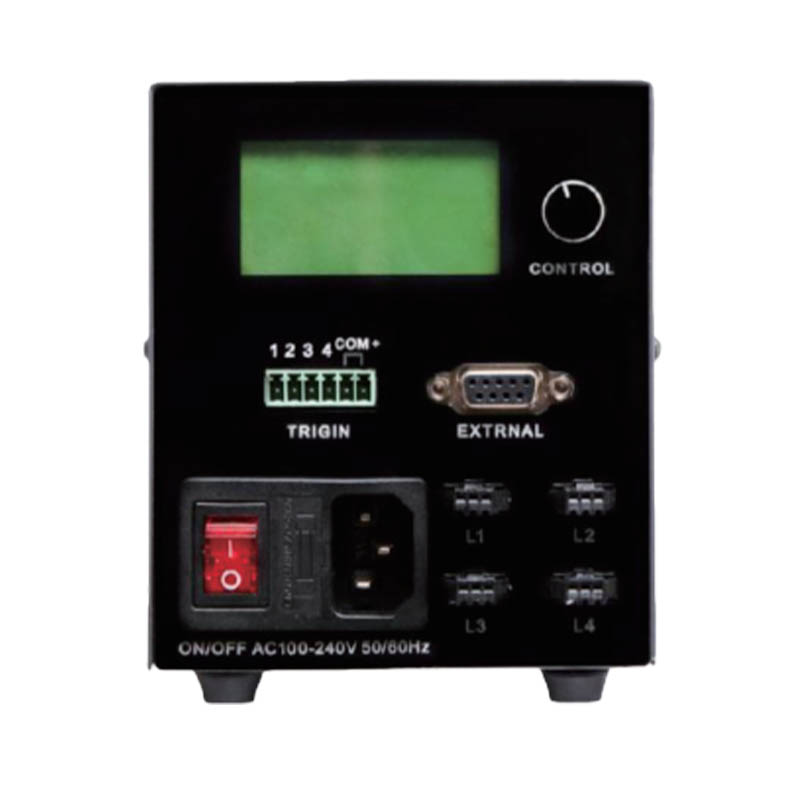
In industrial automation, machine vision, and precision inspection, light source controllers play a crucial role in stably driving and rapidly triggering light sources. Especially in high-speed strobe mode, the light source needs to maintain a high degree of synchronization with the camera shutter, sensor, or automated equipment to ensure clear and stable image acquisition. Insufficient trigger synchronization accuracy or delays in signal transmission can easily lead to exposure deviations, image ghosting, and detection errors, thus affecting overall inspection efficiency and product quality.
1. Optimize High-Speed Optical Coupler Structure to Improve Signal Response Speed
In high-speed strobe control, signal transmission efficiency directly affects trigger accuracy. If the internal response speed is too slow, it can easily lead to time deviations between light source on/off. Therefore, improving the performance of high-speed optical couplers is an important way to optimize the controller. High-speed optical couplers can quickly complete electrical signal isolation and transmission while reducing the impact of external interference on the system. Compared to ordinary optical couplers, high-speed devices have shorter response times and more stable output capabilities, effectively reducing trigger delay. Furthermore, in high-frequency continuous operation environments, optimizing the drive circuit layout can reduce signal transmission path losses, thereby further improving system synchronization efficiency and enabling more precise linkage control between the light source and the camera.
2. Enhancing Synchronization Stability through Strengthened Control Algorithms
Relying solely on hardware response speed is insufficient to fully meet the requirements of high-precision strobe; therefore, intelligent control algorithms are equally crucial. Under high-speed operation, unstable control logic can easily lead to trigger time drift or frequency fluctuations. To address this, many high-performance light source controllers employ digital timing control technology to calibrate trigger pulses in real time. For example, by incorporating a built-in high-precision timing module, the system can automatically correct strobe time errors and dynamically adjust the output rhythm based on the equipment's operating status. Simultaneously, some control systems incorporate buffering and prediction mechanisms, enabling the controller to respond to external trigger signals in advance, thereby reducing latency accumulation and improving overall synchronization stability.
3. Reducing Electromagnetic Interference and Signal Distortion
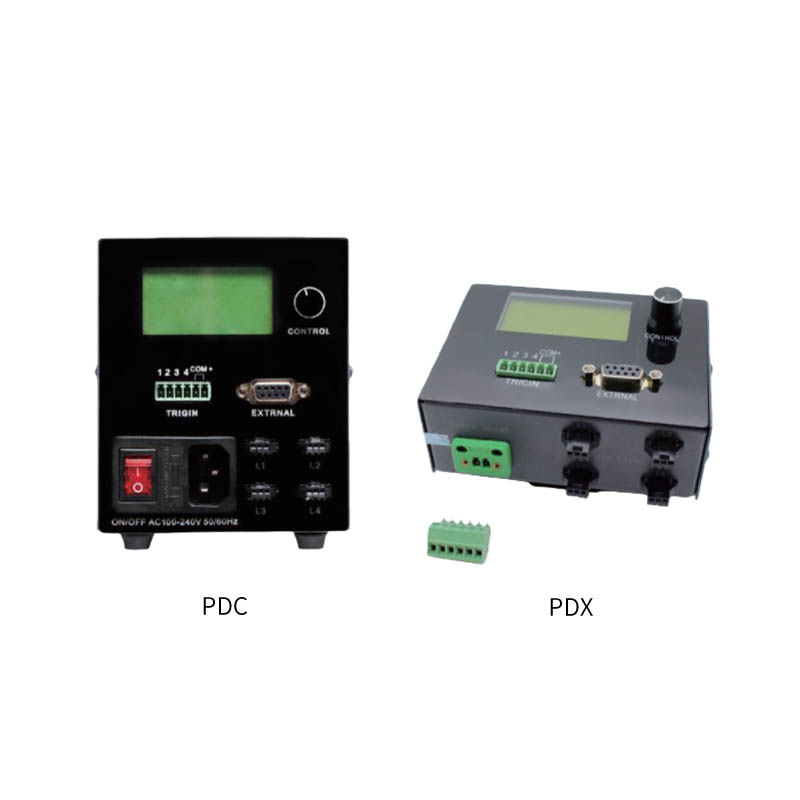
In industrial settings, high-speed equipment, motors, and high-power power supplies generate significant electromagnetic interference. If the controller's anti-interference capability is insufficient, high-speed trigger signals are easily affected, leading to abnormal strobe or synchronization failure. Therefore, improving electromagnetic interference resistance is crucial. Currently, many light source controllers employ shielded circuit designs and reduce the impact of external noise through independent grounding structures. Simultaneously, adding filtering modules to the signal transmission lines can effectively reduce waveform distortion caused by high-frequency interference. Furthermore, for long-distance connection scenarios, differential signal transmission can be used to improve signal stability and avoid decreased triggering accuracy due to line attenuation.
4. Optimizing Output Structure to Improve Stroboscopic Consistency
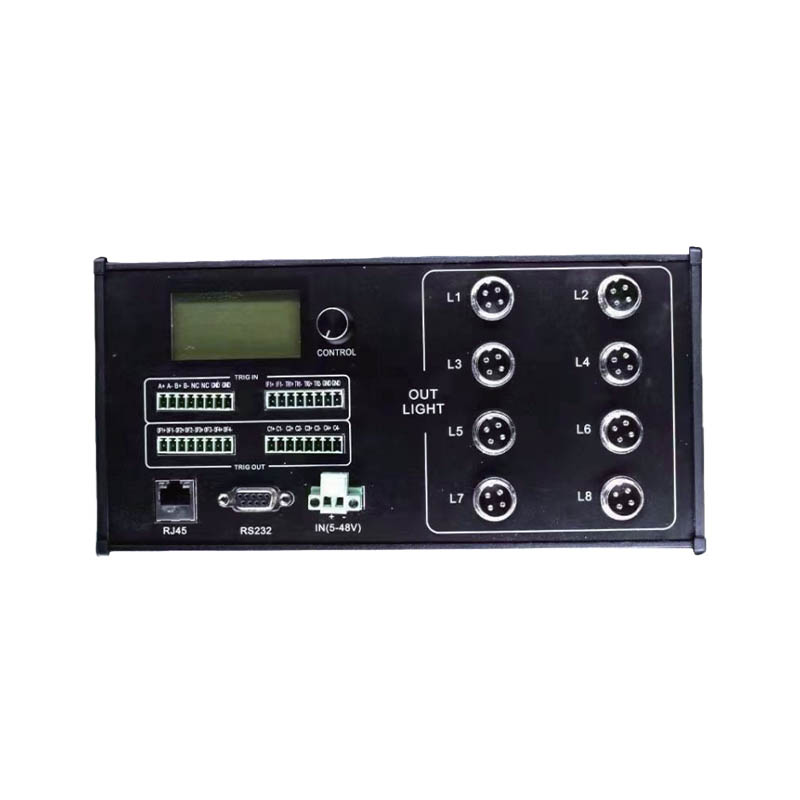
In high-speed stroboscopic applications, large fluctuations in output current can lead to unstable light source brightness, affecting image acquisition. Therefore, optimizing the output structure is also an important measure to improve synchronization accuracy. High-performance light source controllers typically use constant current drive to maintain stable brightness output during high-speed switching. At the same time, improving power conversion efficiency can reduce voltage fluctuations during instantaneous startup. In multi-channel synchronous control systems, it is also necessary to strengthen the consistency design between channels to ensure that different light sources can be stably triggered at the same time, thereby meeting the high-precision imaging requirements of complex industrial inspections.
Overall, achieving high-precision synchronization and low-latency control in high-speed strobe mode requires comprehensive optimization of multiple aspects, including hardware response, control algorithms, anti-interference capabilities, and output stability. By improving the performance of high-speed optocouplers, optimizing digital control logic, reducing electromagnetic interference, and enhancing output consistency, signal delay can be effectively reduced, strobe synchronization accuracy improved, and a more stable and reliable light source control guarantee provided for high-speed machine vision and industrial automation systems.
1. Optimize High-Speed Optical Coupler Structure to Improve Signal Response Speed
In high-speed strobe control, signal transmission efficiency directly affects trigger accuracy. If the internal response speed is too slow, it can easily lead to time deviations between light source on/off. Therefore, improving the performance of high-speed optical couplers is an important way to optimize the controller. High-speed optical couplers can quickly complete electrical signal isolation and transmission while reducing the impact of external interference on the system. Compared to ordinary optical couplers, high-speed devices have shorter response times and more stable output capabilities, effectively reducing trigger delay. Furthermore, in high-frequency continuous operation environments, optimizing the drive circuit layout can reduce signal transmission path losses, thereby further improving system synchronization efficiency and enabling more precise linkage control between the light source and the camera.
2. Enhancing Synchronization Stability through Strengthened Control Algorithms
Relying solely on hardware response speed is insufficient to fully meet the requirements of high-precision strobe; therefore, intelligent control algorithms are equally crucial. Under high-speed operation, unstable control logic can easily lead to trigger time drift or frequency fluctuations. To address this, many high-performance light source controllers employ digital timing control technology to calibrate trigger pulses in real time. For example, by incorporating a built-in high-precision timing module, the system can automatically correct strobe time errors and dynamically adjust the output rhythm based on the equipment's operating status. Simultaneously, some control systems incorporate buffering and prediction mechanisms, enabling the controller to respond to external trigger signals in advance, thereby reducing latency accumulation and improving overall synchronization stability.
3. Reducing Electromagnetic Interference and Signal Distortion
In industrial settings, high-speed equipment, motors, and high-power power supplies generate significant electromagnetic interference. If the controller's anti-interference capability is insufficient, high-speed trigger signals are easily affected, leading to abnormal strobe or synchronization failure. Therefore, improving electromagnetic interference resistance is crucial. Currently, many light source controllers employ shielded circuit designs and reduce the impact of external noise through independent grounding structures. Simultaneously, adding filtering modules to the signal transmission lines can effectively reduce waveform distortion caused by high-frequency interference. Furthermore, for long-distance connection scenarios, differential signal transmission can be used to improve signal stability and avoid decreased triggering accuracy due to line attenuation.
4. Optimizing Output Structure to Improve Stroboscopic Consistency
In high-speed stroboscopic applications, large fluctuations in output current can lead to unstable light source brightness, affecting image acquisition. Therefore, optimizing the output structure is also an important measure to improve synchronization accuracy. High-performance light source controllers typically use constant current drive to maintain stable brightness output during high-speed switching. At the same time, improving power conversion efficiency can reduce voltage fluctuations during instantaneous startup. In multi-channel synchronous control systems, it is also necessary to strengthen the consistency design between channels to ensure that different light sources can be stably triggered at the same time, thereby meeting the high-precision imaging requirements of complex industrial inspections.
Overall, achieving high-precision synchronization and low-latency control in high-speed strobe mode requires comprehensive optimization of multiple aspects, including hardware response, control algorithms, anti-interference capabilities, and output stability. By improving the performance of high-speed optocouplers, optimizing digital control logic, reducing electromagnetic interference, and enhancing output consistency, signal delay can be effectively reduced, strobe synchronization accuracy improved, and a more stable and reliable light source control guarantee provided for high-speed machine vision and industrial automation systems.