


How does a machine vision light source become the secret to clearly outlining the "visual contours" of industrial automation?
Release Time : 2025-12-08
In today's highly automated industrial systems, machine vision systems have become the "eyes" of intelligent manufacturing—capable of completing tasks such as product positioning, dimensional measurement, defect detection, and character recognition in milliseconds, and are widely used in electronics, automotive, food, pharmaceutical, logistics, and many other fields. However, even the highest resolution camera and the most advanced AI algorithms are like observing the world in dense fog without proper lighting: blurry, distorted, and prone to misjudgments. The key to the success or failure of machine vision is often not "what to see," but "how to illuminate it." A machine vision light source is precisely the core secret to accurately outlining the "visual contours" of industrial automation.
In machine vision systems, the light source does not simply provide brightness, but rather performs an optical encoding process on the object being measured. By controlling the direction, wavelength, intensity, and uniformity of the light, the light source transforms the three-dimensional features of the physical world into the contrast, edge sharpness, and texture details in a two-dimensional image. For example, when inspecting minute scratches on the surface of metal parts, using a frontal ring light will mask the defect due to strong reflection; however, using low-angle dark-field illumination allows the scratches to scatter light, appearing as bright lines in the image and creating high contrast against the dark background. This ability to "create shadows with light" makes the light source the primary determinant of image quality. It is widely believed in the industry that "90% of visual problems stem from improper lighting."
2. Diverse Light Source Types: Matching to Needs to "See" Key Features
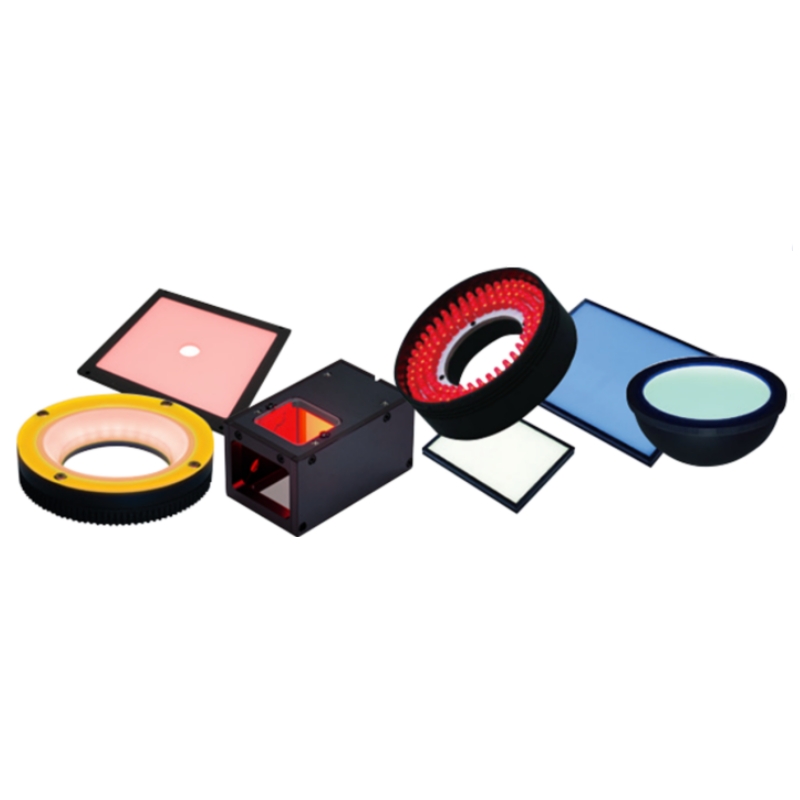
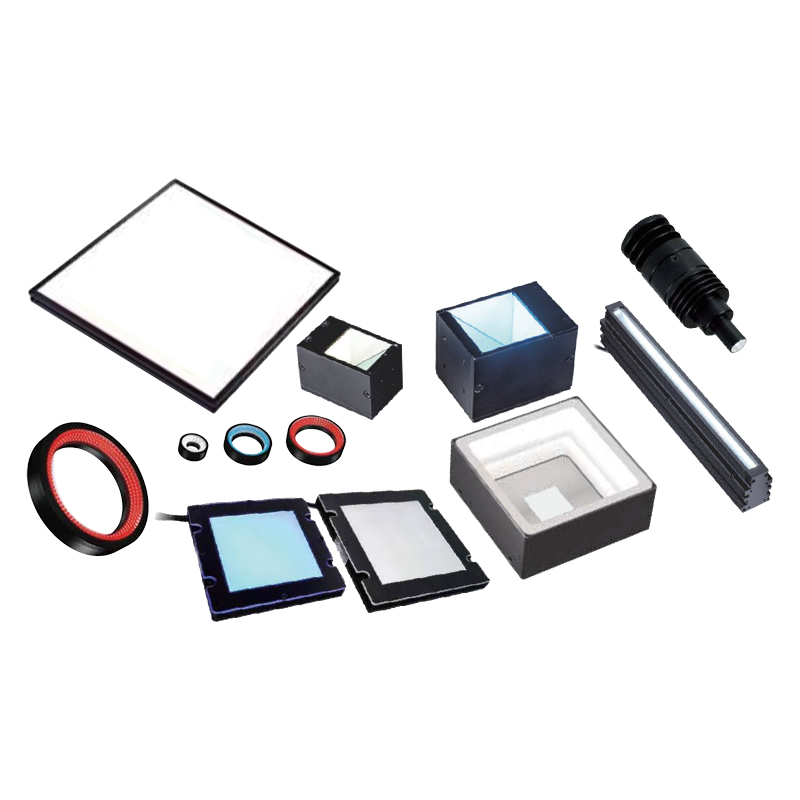
For different materials, shapes, and inspection targets, machine vision has developed various specialized light source types, each corresponding to a specific optical logic:
Ring Light Source: Provides uniform frontal illumination, suitable for common scenarios such as OCR character recognition and PCB solder joint inspection;
Backlight Source: Placed behind the object, forming a high-contrast outline, commonly used for dimensional measurement and part counting;
Coaxial Light Source: Uses a beam splitter... Achieving perpendicular incidence effectively eliminates specular reflection, specifically designed for inspecting highly reflective surfaces such as silicon wafers and mirrors;
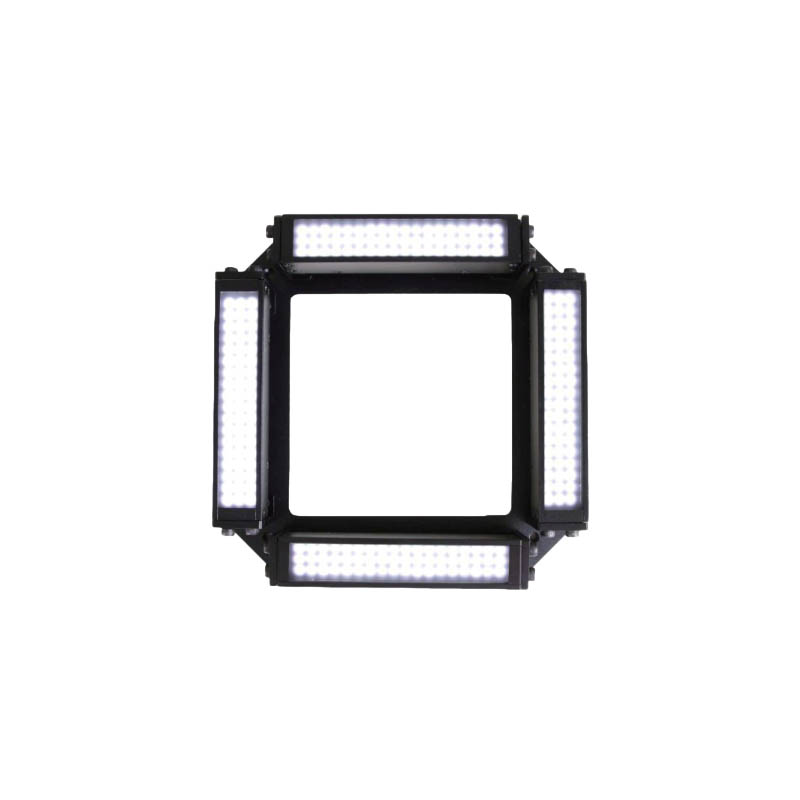
Low-angle dark-field light source: Light sweeps across the surface at an extremely small angle of incidence, highlighting only uneven defects such as scratches and pits;
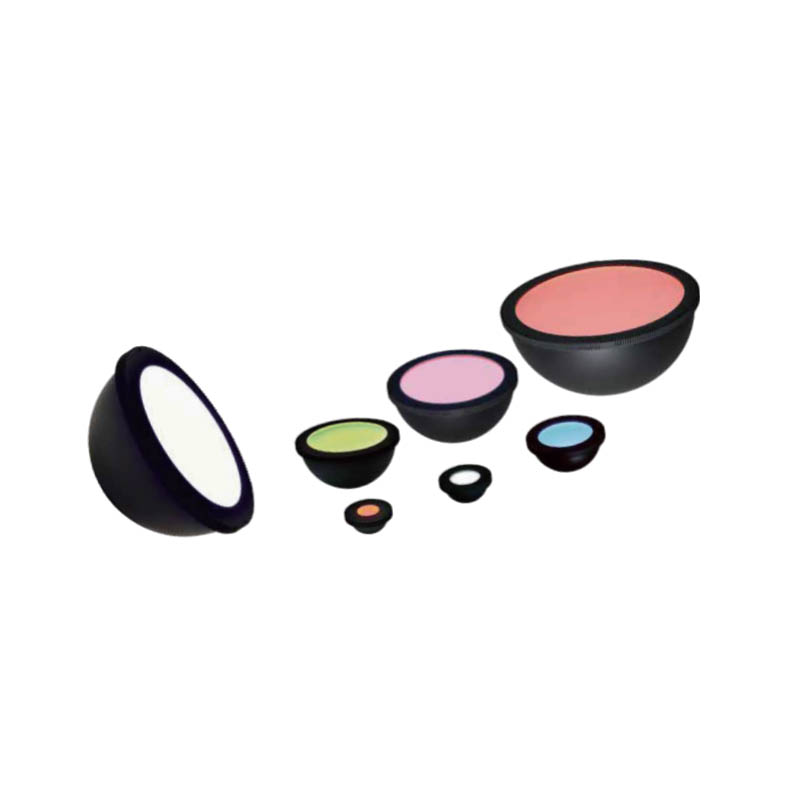
Dome light source: Utilizes diffuse reflection to achieve shadowless illumination, perfectly handling complex reflective structures such as curved surfaces and brushed metals;
Structured light/striped light: Projects specific patterns for 3D contour reconstruction or depth perception;
Ultraviolet and infrared light sources: Used to excite fluorescent markers or penetrate specific materials, respectively, to visualize information invisible to the human eye.
Choosing the appropriate light source is essentially about a deep understanding of the physical properties of the object being measured and the precise formulation of optical strategies.
3. Wavelength as Language: "Translating" Invisible Information with the Spectrum
The visible light range of the human eye is only 400–700 nanometers, while machine vision can extend to ultraviolet and near-infrared. Different wavelengths exhibit significant differences in their penetrability, absorption rate, and scattering characteristics, revealing information in various dimensions:
Blue light has a lower diffraction limit, making it suitable for high-precision measurements;
Red light has strong penetrating power, reducing interference from smoke and dust;
Infrared light can penetrate black plastic casings, used to detect missing internal components;
Ultraviolet light can excite fluorescence reactions in specific inks or adhesives, enabling the identification of invisible anti-counterfeiting marks.
Combined with narrowband filters, the system can construct a "monochrome imaging channel," greatly suppressing ambient light interference and maximizing the signal-to-noise ratio. This "spectral customization" capability truly gives machine vision the ability to "see the invisible."
4. Stability and Uniformity: The Invisible Pillar of Industrial Reliability
Short-term success in a laboratory environment does not equate to long-term production line stability. Industrial environments are characterized by vibration, temperature fluctuations, voltage volatility, and electromagnetic interference. Light sources must meet stringent engineering standards:
Light Intensity Stability: Output fluctuations controlled within ±0.5% to avoid threshold misjudgments due to brightness drift.
Illumination Uniformity: Effective area uniformity >95%, ensuring no gradient between light and dark areas in the image and guaranteeing measurement consistency.
Long Lifespan Design: High-quality LED light sources have a lifespan exceeding 50,000 hours, significantly reducing maintenance frequency.
Environmental Adaptability: IP65 protection rating, constant current drive, and EMC shielding ensure continuous operation under harsh conditions such as oil contamination, humidity, and high temperatures.
Especially in high-speed production lines, light sources must support high-frequency strobe synchronization, precisely matching camera exposure to eliminate motion blur and achieve "what you see is what you get."
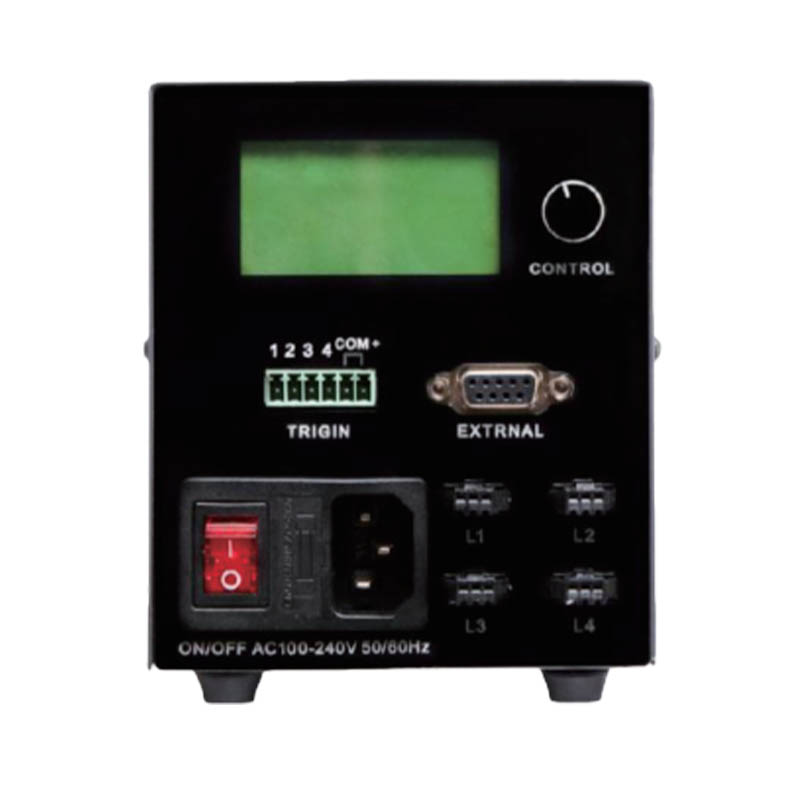
With the development of AI and flexible manufacturing, the traditional "one light for life" model is being broken. The new generation of programmable intelligent light sources supports multi-channel independent dimming and can be linked with vision algorithms: the system can first use white light to locate the target, then switch to a specific wavelength to enhance key features, and finally dynamically adjust the brightness to adapt to environmental changes. Some high-end devices even have built-in light intensity sensors, providing real-time feedback and automatically compensating for attenuation to achieve closed-loop light control. This "adaptive lighting" capability greatly enhances the flexibility and robustness of vision systems in multi-variety, small-batch production.
6. Integration Trend: Integration of Light Source, Lens, and Camera
To simplify installation, save space, and improve system reliability, the industry is accelerating the integrated design of "vision modules." For example, products such as C-mount integrated light source lenses and embedded ring LED industrial cameras highly integrate light sources, optics, and sensing units, reducing external wiring and debugging time, and are particularly suitable for compact applications such as semiconductor packaging, endoscopic inspection, and robot guidance. This "plug-and-play" design concept is driving the rapid evolution of machine vision from specialized engineering to standardized modules.
While often hidden behind the system, the machine vision light source is the first link in the entire vision chain to "interpret" the real world. It uses the language of light to transform the complex physical world into clear, stable, and analyzable digital images. In today's pursuit of "zero-defect manufacturing" and "fully automated quality inspection," there is no reliable visual judgment without a perfect light source. This is why engineers constantly explore the direction, wavelength, intelligence, and integration of light, all to enable the industrial eye to see more clearly, more accurately, and further—because in the world of intelligent manufacturing, seeing clearly is essential for doing things correctly; precise lighting is the ultimate secret to outlining a clear "visual profile."
In machine vision systems, the light source does not simply provide brightness, but rather performs an optical encoding process on the object being measured. By controlling the direction, wavelength, intensity, and uniformity of the light, the light source transforms the three-dimensional features of the physical world into the contrast, edge sharpness, and texture details in a two-dimensional image. For example, when inspecting minute scratches on the surface of metal parts, using a frontal ring light will mask the defect due to strong reflection; however, using low-angle dark-field illumination allows the scratches to scatter light, appearing as bright lines in the image and creating high contrast against the dark background. This ability to "create shadows with light" makes the light source the primary determinant of image quality. It is widely believed in the industry that "90% of visual problems stem from improper lighting."
2. Diverse Light Source Types: Matching to Needs to "See" Key Features
For different materials, shapes, and inspection targets, machine vision has developed various specialized light source types, each corresponding to a specific optical logic:
Ring Light Source: Provides uniform frontal illumination, suitable for common scenarios such as OCR character recognition and PCB solder joint inspection;
Backlight Source: Placed behind the object, forming a high-contrast outline, commonly used for dimensional measurement and part counting;
Coaxial Light Source: Uses a beam splitter... Achieving perpendicular incidence effectively eliminates specular reflection, specifically designed for inspecting highly reflective surfaces such as silicon wafers and mirrors;
Low-angle dark-field light source: Light sweeps across the surface at an extremely small angle of incidence, highlighting only uneven defects such as scratches and pits;
Dome light source: Utilizes diffuse reflection to achieve shadowless illumination, perfectly handling complex reflective structures such as curved surfaces and brushed metals;
Structured light/striped light: Projects specific patterns for 3D contour reconstruction or depth perception;
Ultraviolet and infrared light sources: Used to excite fluorescent markers or penetrate specific materials, respectively, to visualize information invisible to the human eye.
Choosing the appropriate light source is essentially about a deep understanding of the physical properties of the object being measured and the precise formulation of optical strategies.
3. Wavelength as Language: "Translating" Invisible Information with the Spectrum
The visible light range of the human eye is only 400–700 nanometers, while machine vision can extend to ultraviolet and near-infrared. Different wavelengths exhibit significant differences in their penetrability, absorption rate, and scattering characteristics, revealing information in various dimensions:
Blue light has a lower diffraction limit, making it suitable for high-precision measurements;
Red light has strong penetrating power, reducing interference from smoke and dust;
Infrared light can penetrate black plastic casings, used to detect missing internal components;
Ultraviolet light can excite fluorescence reactions in specific inks or adhesives, enabling the identification of invisible anti-counterfeiting marks.
Combined with narrowband filters, the system can construct a "monochrome imaging channel," greatly suppressing ambient light interference and maximizing the signal-to-noise ratio. This "spectral customization" capability truly gives machine vision the ability to "see the invisible."
4. Stability and Uniformity: The Invisible Pillar of Industrial Reliability
Short-term success in a laboratory environment does not equate to long-term production line stability. Industrial environments are characterized by vibration, temperature fluctuations, voltage volatility, and electromagnetic interference. Light sources must meet stringent engineering standards:
Light Intensity Stability: Output fluctuations controlled within ±0.5% to avoid threshold misjudgments due to brightness drift.
Illumination Uniformity: Effective area uniformity >95%, ensuring no gradient between light and dark areas in the image and guaranteeing measurement consistency.
Long Lifespan Design: High-quality LED light sources have a lifespan exceeding 50,000 hours, significantly reducing maintenance frequency.
Environmental Adaptability: IP65 protection rating, constant current drive, and EMC shielding ensure continuous operation under harsh conditions such as oil contamination, humidity, and high temperatures.
Especially in high-speed production lines, light sources must support high-frequency strobe synchronization, precisely matching camera exposure to eliminate motion blur and achieve "what you see is what you get."
With the development of AI and flexible manufacturing, the traditional "one light for life" model is being broken. The new generation of programmable intelligent light sources supports multi-channel independent dimming and can be linked with vision algorithms: the system can first use white light to locate the target, then switch to a specific wavelength to enhance key features, and finally dynamically adjust the brightness to adapt to environmental changes. Some high-end devices even have built-in light intensity sensors, providing real-time feedback and automatically compensating for attenuation to achieve closed-loop light control. This "adaptive lighting" capability greatly enhances the flexibility and robustness of vision systems in multi-variety, small-batch production.
6. Integration Trend: Integration of Light Source, Lens, and Camera
To simplify installation, save space, and improve system reliability, the industry is accelerating the integrated design of "vision modules." For example, products such as C-mount integrated light source lenses and embedded ring LED industrial cameras highly integrate light sources, optics, and sensing units, reducing external wiring and debugging time, and are particularly suitable for compact applications such as semiconductor packaging, endoscopic inspection, and robot guidance. This "plug-and-play" design concept is driving the rapid evolution of machine vision from specialized engineering to standardized modules.
While often hidden behind the system, the machine vision light source is the first link in the entire vision chain to "interpret" the real world. It uses the language of light to transform the complex physical world into clear, stable, and analyzable digital images. In today's pursuit of "zero-defect manufacturing" and "fully automated quality inspection," there is no reliable visual judgment without a perfect light source. This is why engineers constantly explore the direction, wavelength, intelligence, and integration of light, all to enable the industrial eye to see more clearly, more accurately, and further—because in the world of intelligent manufacturing, seeing clearly is essential for doing things correctly; precise lighting is the ultimate secret to outlining a clear "visual profile."