


How Does Stepless Adjustment of a Light Source Controller Potentiometer Unlock Free Control of Illumination Power?
Release Time : 2026-01-26
In fields with extremely high requirements for lighting precision, such as machine vision, industrial inspection, scientific imaging, and even high-end photography, the light source is no longer a simple tool for "illumination," but a key variable determining image quality, detection accuracy, and system efficiency. The light source controller plays the role of the "commander of light." Among these, the design using a potentiometer to achieve stepless adjustment of output power, with its intuitive, precise, and flexible control capabilities, unlocks unprecedented lighting freedom for users. Combined with the millisecond-level flicker response provided by the built-in high-speed optocoupler, modern light source systems possess both flexibility and speed.
1. Stepless Potentiometer Adjustment: A Leap from "On/Off" to "Continuous"
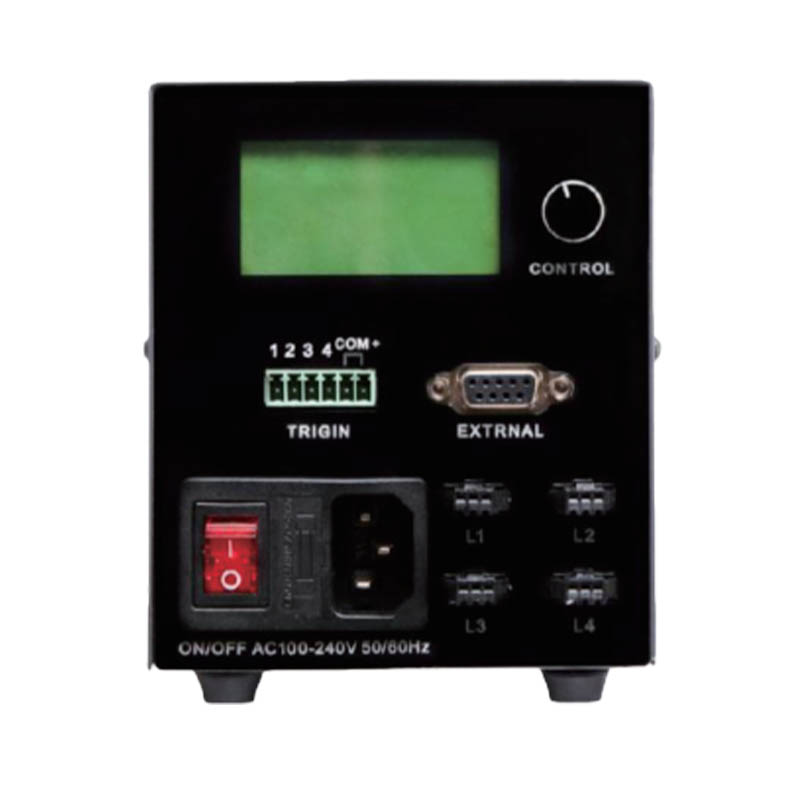
Traditional light source controls often use gear switching or digital preset modes, which can achieve basic brightness changes but are difficult to meet the needs of fine-tuning. A light source controller based on an analog potentiometer, however, continuously changes the resistance value by rotating a knob, thereby linearly adjusting the output current or voltage, achieving stepless power adjustment within the range of 0%–100%. This "what you see is what you get" operation method is not only intuitive and efficient, but also precisely matches the subtle requirements of different materials' reflective properties, lens exposure parameters, or detection algorithms for light intensity. For example, when detecting defects on highly reflective metal surfaces, the light source needs to be adjusted to the critical brightness to avoid overexposure; while in low-contrast character recognition, soft and uniform diffused light is required—potentiometer adjustment makes these scene transitions as natural as breathing.
2. High-speed optical coupler: Giving the light source "lightning-fast response" capability
Stable dimming alone is insufficient for high-speed industrial scenarios. In assembly line visual inspection, products pass through at a rate of hundreds per minute, and the light source must complete the entire process of triggering, lighting, and extinguishing in an extremely short time; otherwise, it will lead to blurred images or missed detections. To address this, an advanced light source controller integrates a built-in high-speed optical coupler to achieve electrical isolation and high-speed transmission between the input control signal and the output drive circuit. The optical coupler's response time can reach the microsecond level, significantly improving the trigger response speed and ensuring strict synchronization between the light source, camera shutter, and encoder signals. Simultaneously, its isolation characteristics effectively suppress electromagnetic interference, ensuring the system's stability in complex industrial environments. With its strobe function, the light source can output peak brightness several times that of constant illumination within an extremely short pulse, freezing moving objects, preventing heat buildup, and extending LED lifespan.
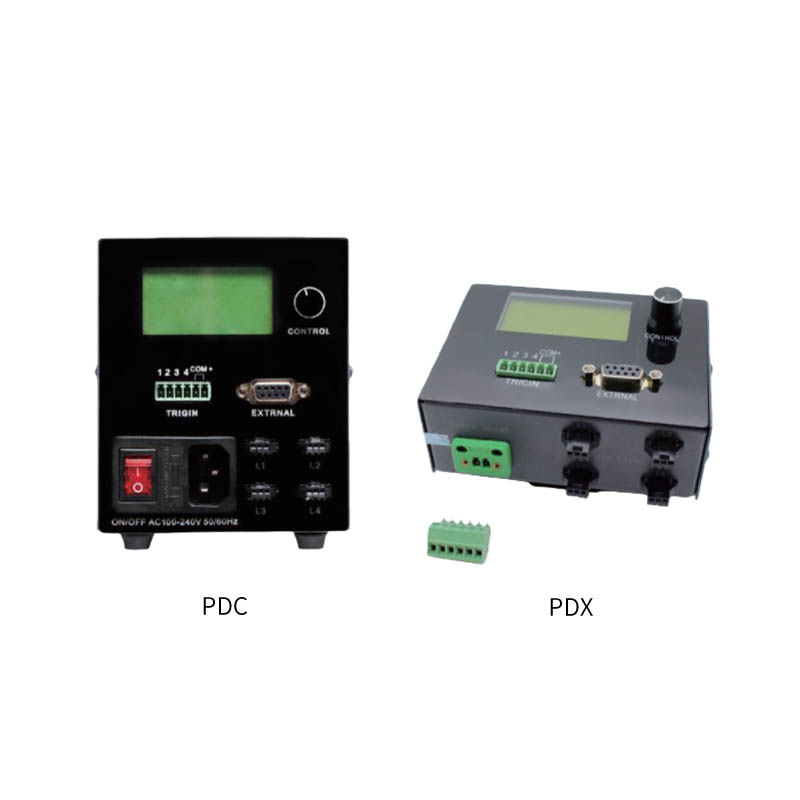
3. Flexible Configuration and Customization: Adapting to Diverse Application Needs
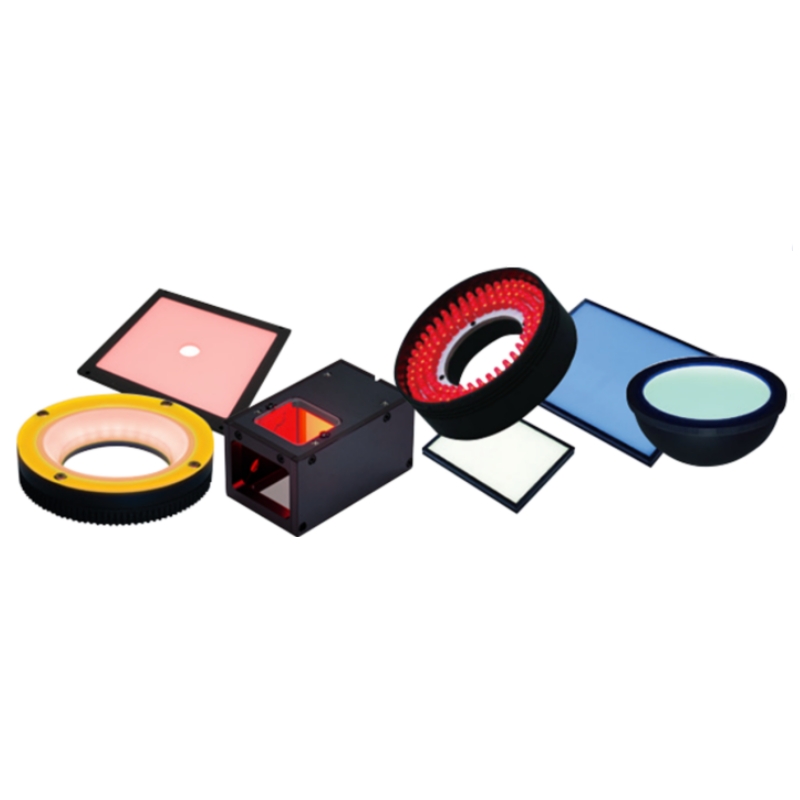
Different industries have vastly different requirements for light source control: semiconductor detection requires nanosecond-level synchronization, agricultural sorting emphasizes long-term stable output, while stage effects pursue dynamic color and brightness changes. To address this, mainstream light source controllers offer various models and accessory combinations—covering constant current/constant voltage output, single-channel/multi-channel independent control, analog/digital/PWM input interfaces, etc., and supporting seamless integration with PLCs, industrial PCs, and camera I/O. More importantly, manufacturers generally accept deep customization: users can specify their requirements based on specific equipment size, communication protocols, protection levels, and even human-machine interfaces to create a custom control solution. This "modular + customized" strategy greatly expands the product's applicability.

4. Application Scenarios: From Precision Manufacturing to Intelligent Vision
On 3C electronics assembly lines, stepless dimming controllers ensure uniform, glare-free illumination during mobile phone screen scratch detection; in logistics sorting centers, high-speed strobe lights, combined with barcode cameras, enable accurate high-speed package information reading; in biological laboratories, researchers observe the reactions of living cells under different lighting conditions by fine-tuning the light source intensity. Behind these scenarios lies the collaborative work of potentiometers and high-speed optocouplers—flexible dimming and instantaneous flashing, truly achieving "light on demand."
The evolution of light source controllers is essentially a refined control over the physical quantity of "light." Stepless potentiometer adjustment gives users free control over power, while high-speed optocouplers inject speed and reliability, and flexible models and customization capabilities ensure the technology's application in real-world scenarios. As lighting moves from "absence" to "precision," light source controllers are no longer just accessories, but indispensable "nerve centers" in intelligent vision systems. In the future, with the development of AI vision and flexible manufacturing, these controllers will continue to illuminate every corner of industrial intelligence with higher precision, faster speed, and stronger adaptability.
1. Stepless Potentiometer Adjustment: A Leap from "On/Off" to "Continuous"
Traditional light source controls often use gear switching or digital preset modes, which can achieve basic brightness changes but are difficult to meet the needs of fine-tuning. A light source controller based on an analog potentiometer, however, continuously changes the resistance value by rotating a knob, thereby linearly adjusting the output current or voltage, achieving stepless power adjustment within the range of 0%–100%. This "what you see is what you get" operation method is not only intuitive and efficient, but also precisely matches the subtle requirements of different materials' reflective properties, lens exposure parameters, or detection algorithms for light intensity. For example, when detecting defects on highly reflective metal surfaces, the light source needs to be adjusted to the critical brightness to avoid overexposure; while in low-contrast character recognition, soft and uniform diffused light is required—potentiometer adjustment makes these scene transitions as natural as breathing.
2. High-speed optical coupler: Giving the light source "lightning-fast response" capability
Stable dimming alone is insufficient for high-speed industrial scenarios. In assembly line visual inspection, products pass through at a rate of hundreds per minute, and the light source must complete the entire process of triggering, lighting, and extinguishing in an extremely short time; otherwise, it will lead to blurred images or missed detections. To address this, an advanced light source controller integrates a built-in high-speed optical coupler to achieve electrical isolation and high-speed transmission between the input control signal and the output drive circuit. The optical coupler's response time can reach the microsecond level, significantly improving the trigger response speed and ensuring strict synchronization between the light source, camera shutter, and encoder signals. Simultaneously, its isolation characteristics effectively suppress electromagnetic interference, ensuring the system's stability in complex industrial environments. With its strobe function, the light source can output peak brightness several times that of constant illumination within an extremely short pulse, freezing moving objects, preventing heat buildup, and extending LED lifespan.
3. Flexible Configuration and Customization: Adapting to Diverse Application Needs
Different industries have vastly different requirements for light source control: semiconductor detection requires nanosecond-level synchronization, agricultural sorting emphasizes long-term stable output, while stage effects pursue dynamic color and brightness changes. To address this, mainstream light source controllers offer various models and accessory combinations—covering constant current/constant voltage output, single-channel/multi-channel independent control, analog/digital/PWM input interfaces, etc., and supporting seamless integration with PLCs, industrial PCs, and camera I/O. More importantly, manufacturers generally accept deep customization: users can specify their requirements based on specific equipment size, communication protocols, protection levels, and even human-machine interfaces to create a custom control solution. This "modular + customized" strategy greatly expands the product's applicability.
4. Application Scenarios: From Precision Manufacturing to Intelligent Vision
On 3C electronics assembly lines, stepless dimming controllers ensure uniform, glare-free illumination during mobile phone screen scratch detection; in logistics sorting centers, high-speed strobe lights, combined with barcode cameras, enable accurate high-speed package information reading; in biological laboratories, researchers observe the reactions of living cells under different lighting conditions by fine-tuning the light source intensity. Behind these scenarios lies the collaborative work of potentiometers and high-speed optocouplers—flexible dimming and instantaneous flashing, truly achieving "light on demand."
The evolution of light source controllers is essentially a refined control over the physical quantity of "light." Stepless potentiometer adjustment gives users free control over power, while high-speed optocouplers inject speed and reliability, and flexible models and customization capabilities ensure the technology's application in real-world scenarios. As lighting moves from "absence" to "precision," light source controllers are no longer just accessories, but indispensable "nerve centers" in intelligent vision systems. In the future, with the development of AI vision and flexible manufacturing, these controllers will continue to illuminate every corner of industrial intelligence with higher precision, faster speed, and stronger adaptability.