


How can a double-platform fully automatic screw machine prevent stripping or damage to screw heads in high-density consumer electronics assembly?
Release Time : 2026-03-30
In the production of modern consumer electronics, such as smartphones, laptops, tablets, cameras, and VR 3D glasses, the widespread use of high-density structures and miniature screws places extremely high demands on automated assembly. Double-platform fully automatic screw machines, with their high efficiency, precise positioning, and modular design, have become core equipment in the assembly of these products. However, in high-density assembly scenarios, the problem of stripped or damaged screw heads remains a challenge that urgently needs to be addressed in the production process.
1. Precise Torque Control is Key
One of the main causes of stripped or damaged screw heads is excessive tightening torque or torque fluctuations. Double-platform fully automatic screw machines are typically equipped with a high-precision torque control system that can apply precise tightening force to each screw. By monitoring and adjusting the torque curve in real time, the equipment can slow down the torque increase before the screw is fully threaded, thereby avoiding overload damage to the screw head or threads. Furthermore, adjustable torque settings allow for customized parameter settings for screws of different materials and sizes, effectively reducing the risk of stripping.
2. High-Precision Screw Positioning and Feeding System
In the assembly of miniature screws, the alignment accuracy between the screw head and the thread directly affects the assembly quality. The double-platform fully automatic screw machine employs a screw feeding module and an automatic alignment system, using a high-speed vibratory feeder or screw feeder to precisely deliver the screw into the installation position. Simultaneously, the fixture design ensures stable fixation of the assembled parts, preventing stripping or damage caused by screw insertion angle deviations. Some high-end equipment also incorporates vision sensors or laser ranging systems to achieve micron-level alignment between the screw and the thread, improving the reliability of miniature screw assembly.

3. Dual-Platform Design Enhances Continuity and Stability
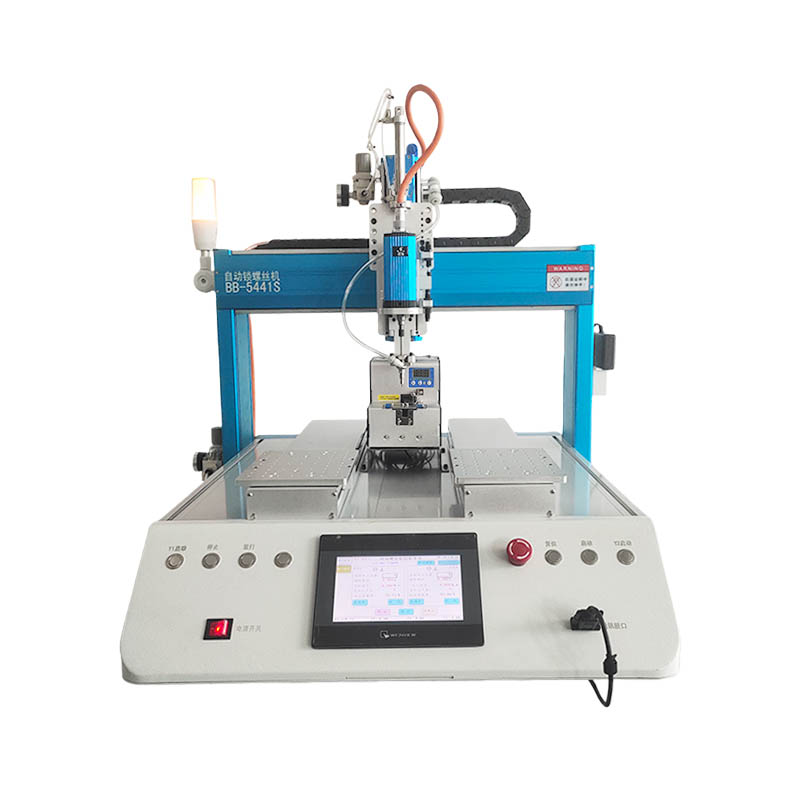
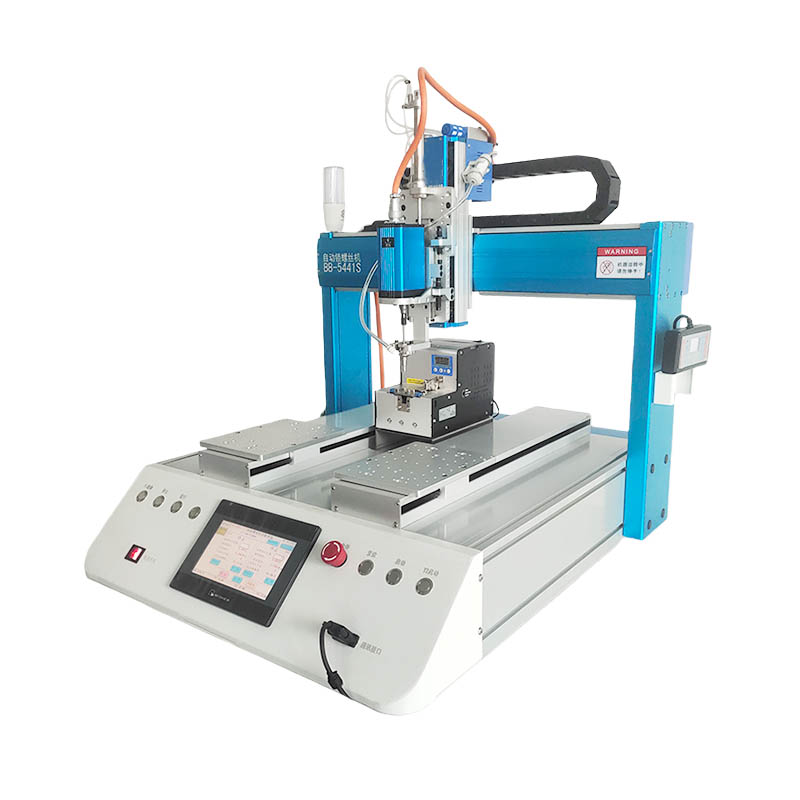
The advantage of the dual-platform structure lies in its ability to perform alternating operations: one side assembles screws while the other side handles part loading/unloading or pre-assembly preparation. This design not only improves production efficiency but also reduces vibration or accuracy fluctuations caused by continuous high-intensity tightening on a single platform, thereby reducing the probability of screw damage. Furthermore, the dual platforms can quickly switch drill bits, nozzles, and fixtures according to different screw specifications, ensuring that each screw is tightened at the optimal angle and force.
4. Intelligent Monitoring and Error-Proofing Functions
Modern double-platform fully automatic screw machines are typically equipped with intelligent monitoring systems that monitor torque, angle, and speed during the tightening process in real time. If an anomaly is detected, such as incomplete screw insertion, abnormal thread resistance, or screw slippage, the system immediately stops the tightening operation and issues an alarm or automatically rejects the affected part. This error-proofing function effectively reduces screw damage caused by operational errors or material differences, improving production yield.
5. Optimized Screw Machine Mechanical Structure
Optimized mechanical design is also a crucial factor in preventing screw head damage. The motor, drive rod, and drill bit connection of the screw machine are made of high-rigidity materials to reduce processing vibration and ensure stable screw rotation during tightening. Furthermore, the contact surface between the nozzle and the screw head is specially designed to accommodate different screw head types, reducing local stress concentration while transmitting torque, thus protecting the screw head from damage.
6. Flexibility for High-Density and Complex Products
High-density electronic products feature densely packed screws and small gaps between components, requiring screw machines to maintain a balance between operating speed and precision. Through programmable control and modular fixture design, the double-platform fully automatic screw machine can optimize the path for different product layouts, ensuring screws smoothly enter the threads even in confined spaces. Simultaneously, the pick-up and tightening angles of the miniature screws are precisely calculated to reduce the risk of stripping or damage.
In high-density consumer electronics assembly, the double-platform fully automatic screw machine effectively avoids screw stripping and damage through multiple methods, including precise torque control, high-precision screw positioning, alternating operation of the dual platforms, intelligent monitoring, and optimized mechanical structure. These technologies not only ensure precise tightening of miniature screws but also improve production efficiency and product quality, enabling stable and reliable operation of automated assembly in complex electronic product fields, providing solid technical support for modern consumer electronics manufacturing.
1. Precise Torque Control is Key
One of the main causes of stripped or damaged screw heads is excessive tightening torque or torque fluctuations. Double-platform fully automatic screw machines are typically equipped with a high-precision torque control system that can apply precise tightening force to each screw. By monitoring and adjusting the torque curve in real time, the equipment can slow down the torque increase before the screw is fully threaded, thereby avoiding overload damage to the screw head or threads. Furthermore, adjustable torque settings allow for customized parameter settings for screws of different materials and sizes, effectively reducing the risk of stripping.
2. High-Precision Screw Positioning and Feeding System
In the assembly of miniature screws, the alignment accuracy between the screw head and the thread directly affects the assembly quality. The double-platform fully automatic screw machine employs a screw feeding module and an automatic alignment system, using a high-speed vibratory feeder or screw feeder to precisely deliver the screw into the installation position. Simultaneously, the fixture design ensures stable fixation of the assembled parts, preventing stripping or damage caused by screw insertion angle deviations. Some high-end equipment also incorporates vision sensors or laser ranging systems to achieve micron-level alignment between the screw and the thread, improving the reliability of miniature screw assembly.
3. Dual-Platform Design Enhances Continuity and Stability
The advantage of the dual-platform structure lies in its ability to perform alternating operations: one side assembles screws while the other side handles part loading/unloading or pre-assembly preparation. This design not only improves production efficiency but also reduces vibration or accuracy fluctuations caused by continuous high-intensity tightening on a single platform, thereby reducing the probability of screw damage. Furthermore, the dual platforms can quickly switch drill bits, nozzles, and fixtures according to different screw specifications, ensuring that each screw is tightened at the optimal angle and force.
4. Intelligent Monitoring and Error-Proofing Functions
Modern double-platform fully automatic screw machines are typically equipped with intelligent monitoring systems that monitor torque, angle, and speed during the tightening process in real time. If an anomaly is detected, such as incomplete screw insertion, abnormal thread resistance, or screw slippage, the system immediately stops the tightening operation and issues an alarm or automatically rejects the affected part. This error-proofing function effectively reduces screw damage caused by operational errors or material differences, improving production yield.
5. Optimized Screw Machine Mechanical Structure
Optimized mechanical design is also a crucial factor in preventing screw head damage. The motor, drive rod, and drill bit connection of the screw machine are made of high-rigidity materials to reduce processing vibration and ensure stable screw rotation during tightening. Furthermore, the contact surface between the nozzle and the screw head is specially designed to accommodate different screw head types, reducing local stress concentration while transmitting torque, thus protecting the screw head from damage.
6. Flexibility for High-Density and Complex Products
High-density electronic products feature densely packed screws and small gaps between components, requiring screw machines to maintain a balance between operating speed and precision. Through programmable control and modular fixture design, the double-platform fully automatic screw machine can optimize the path for different product layouts, ensuring screws smoothly enter the threads even in confined spaces. Simultaneously, the pick-up and tightening angles of the miniature screws are precisely calculated to reduce the risk of stripping or damage.
In high-density consumer electronics assembly, the double-platform fully automatic screw machine effectively avoids screw stripping and damage through multiple methods, including precise torque control, high-precision screw positioning, alternating operation of the dual platforms, intelligent monitoring, and optimized mechanical structure. These technologies not only ensure precise tightening of miniature screws but also improve production efficiency and product quality, enabling stable and reliable operation of automated assembly in complex electronic product fields, providing solid technical support for modern consumer electronics manufacturing.