


How do automatic dispensing machines achieve high-precision control of complex 3D trajectories to meet the dispensing needs of irregularly shaped workpieces?
Release Time : 2026-06-17
As a crucial component of modern automated precision manufacturing equipment, automatic dispensing machines are widely used in various fields, including new energy vehicle parts, solar photovoltaic modules, LED packaging, circuit boards, battery manufacturing, and smart wearable devices, thanks to their ability to control complex spatial trajectories, high-precision dispensing capabilities, and automatic error correction. In these applications, workpiece structures often exhibit irregular, three-dimensional, and miniaturized characteristics, placing higher demands on the spatial adaptability and precision control of the dispensing path. Inaccurate trajectory control not only affects the product's bonding strength but may also cause uneven glue application or glue overflow, thus impacting overall product quality.
1. Application of High-Precision Motion Control Systems
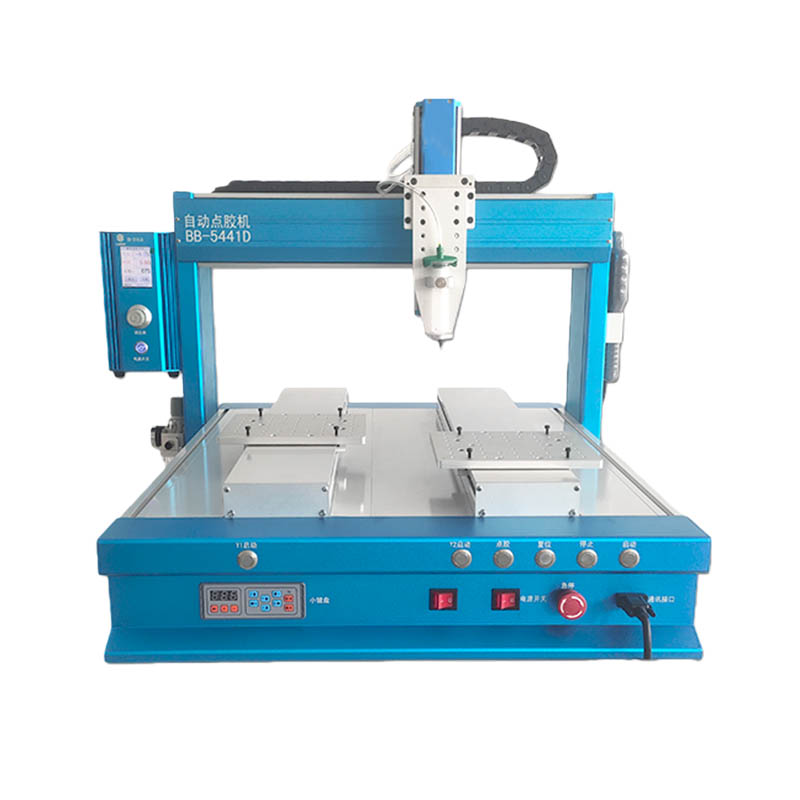
The foundation for achieving complex 3D trajectory control lies in high-precision motion control systems. Through multi-axis linkage control technology, the equipment achieves synchronous and coordinated movement in the X, Y, Z, and rotational axes, thereby completing precise execution of arbitrary spatial paths. Simultaneously, a high-resolution servo drive system can adjust the motion position and speed in real time, reducing error accumulation and ensuring the dispensing needle always stays on the predetermined trajectory, improving overall processing accuracy and stability.

2. 3D Path Planning and Algorithm Optimization
In the dispensing process for complex, irregularly shaped workpieces, mechanical control alone is insufficient to achieve optimal path coverage; intelligent path planning algorithms are necessary. Digital modeling technology is used to reconstruct the workpiece in 3D and generate the optimal dispensing trajectory, effectively reducing duplicate paths and idle travel. Simultaneously, the optimization algorithm can automatically adjust the dispensing speed and glue volume output according to different structural areas, making the dispensing process more uniform and precise, and improving overall process consistency.
3. Visual Recognition and Automatic Error Correction Technology
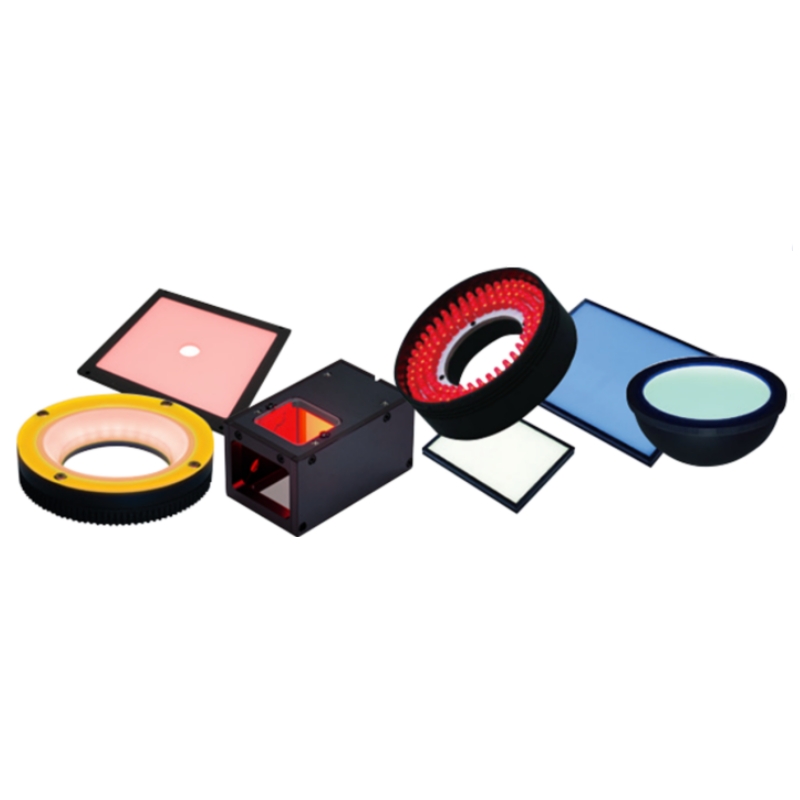
To further improve processing accuracy, automatic dispensing machines are typically equipped with high-precision visual recognition systems. By acquiring workpiece position and orientation information in real time, the actual processing path can be dynamically corrected to ensure that the dispensing position matches the designed path. When offsets or clamping errors occur, the system can automatically compensate and adjust, effectively improving processing stability, reducing human error, and increasing product yield.
4. Glue Volume Control and Pressure Stabilization Technology
In high-precision dispensing processes, the stability of glue volume output is equally crucial. Precise control of the valve body and pressure regulation system enables accurate control of adhesive flow, preventing adhesive interruptions or overflows caused by pressure fluctuations. Simultaneously, dynamic adjustments based on different materials and process requirements ensure uniform adhesive output throughout complex three-dimensional trajectories, thereby improving overall dispensing quality.
5. System Integration and Intelligent Upgrade
With the development of intelligent manufacturing technology, automatic dispensing machines are gradually evolving towards high integration and intelligence. By integrating motion control, visual inspection, path planning, and data feedback systems, closed-loop control throughout the entire process can be achieved, improving equipment response speed and processing accuracy. Furthermore, leveraging data analysis and learning capabilities, the equipment can continuously optimize dispensing strategies, further enhancing its ability to process complex three-dimensional trajectories and production efficiency, providing more stable and reliable dispensing solutions for high-end manufacturing.
1. Application of High-Precision Motion Control Systems
The foundation for achieving complex 3D trajectory control lies in high-precision motion control systems. Through multi-axis linkage control technology, the equipment achieves synchronous and coordinated movement in the X, Y, Z, and rotational axes, thereby completing precise execution of arbitrary spatial paths. Simultaneously, a high-resolution servo drive system can adjust the motion position and speed in real time, reducing error accumulation and ensuring the dispensing needle always stays on the predetermined trajectory, improving overall processing accuracy and stability.
2. 3D Path Planning and Algorithm Optimization
In the dispensing process for complex, irregularly shaped workpieces, mechanical control alone is insufficient to achieve optimal path coverage; intelligent path planning algorithms are necessary. Digital modeling technology is used to reconstruct the workpiece in 3D and generate the optimal dispensing trajectory, effectively reducing duplicate paths and idle travel. Simultaneously, the optimization algorithm can automatically adjust the dispensing speed and glue volume output according to different structural areas, making the dispensing process more uniform and precise, and improving overall process consistency.
3. Visual Recognition and Automatic Error Correction Technology
To further improve processing accuracy, automatic dispensing machines are typically equipped with high-precision visual recognition systems. By acquiring workpiece position and orientation information in real time, the actual processing path can be dynamically corrected to ensure that the dispensing position matches the designed path. When offsets or clamping errors occur, the system can automatically compensate and adjust, effectively improving processing stability, reducing human error, and increasing product yield.
4. Glue Volume Control and Pressure Stabilization Technology
In high-precision dispensing processes, the stability of glue volume output is equally crucial. Precise control of the valve body and pressure regulation system enables accurate control of adhesive flow, preventing adhesive interruptions or overflows caused by pressure fluctuations. Simultaneously, dynamic adjustments based on different materials and process requirements ensure uniform adhesive output throughout complex three-dimensional trajectories, thereby improving overall dispensing quality.
5. System Integration and Intelligent Upgrade
With the development of intelligent manufacturing technology, automatic dispensing machines are gradually evolving towards high integration and intelligence. By integrating motion control, visual inspection, path planning, and data feedback systems, closed-loop control throughout the entire process can be achieved, improving equipment response speed and processing accuracy. Furthermore, leveraging data analysis and learning capabilities, the equipment can continuously optimize dispensing strategies, further enhancing its ability to process complex three-dimensional trajectories and production efficiency, providing more stable and reliable dispensing solutions for high-end manufacturing.