


How does a double-platform fully automatic screw machine utilize a rotary screw feeding mechanism to improve feeding stability and continuous operation?
Release Time : 2026-06-26
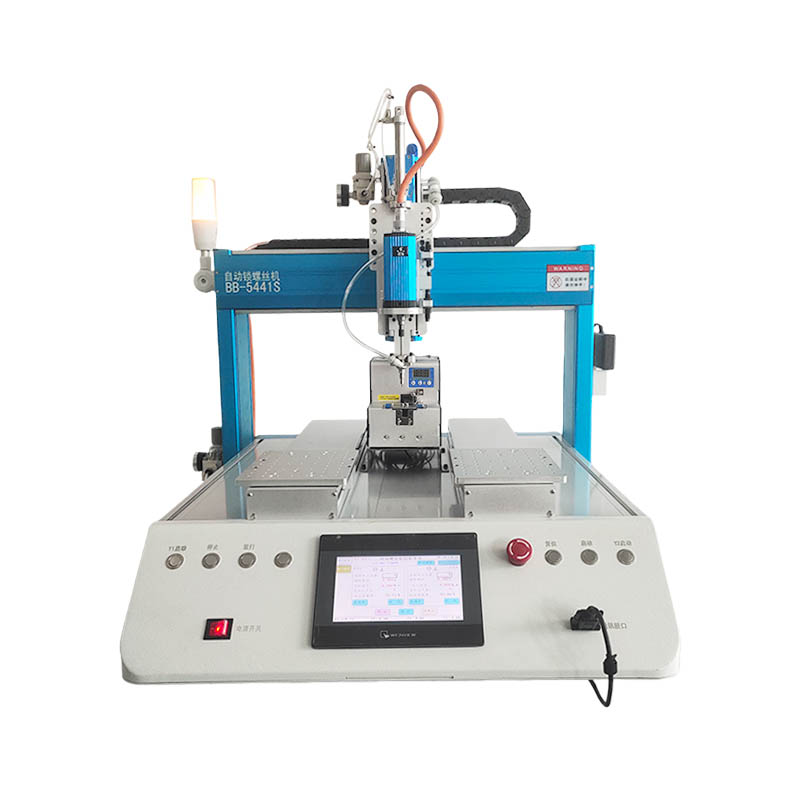
In modern automated assembly production, screw fastening efficiency and feeding stability directly affect the overall production line's operating efficiency. For industries such as electronics, automotive parts, home appliances, and precision hardware, continuous and stable screw feeding is crucial for achieving high-quality automated assembly. The double-platform fully automatic screw machine employs a rotary screw feeding mechanism combined with a dual Y-axis alternating operation mode. This not only improves the stability of screw conveying but also effectively ensures the equipment's continuous operation capability, providing reliable support for enterprises to achieve high-efficiency and intelligent production.
1. Rotary Feeding Improves Screw Arrangement Stability
The rotary screw feeding mechanism automatically organizes and orients bulk screws through a precisely designed rotary track, ensuring that screws are conveyed in an orderly manner in a uniform direction. Compared to traditional vibratory feeder feeding methods, rotary feeding operates more smoothly, effectively reducing screw flipping, jamming, or overlapping, providing a continuous and stable screw supply for subsequent fastening processes, thereby improving overall production efficiency.
2. Four-Segment Indexing Mechanism Ensures Precise Feeding
The equipment employs a small four-segment indexing mechanism to precisely control the rotary table's operating cycle. Each indexing accurately delivers the screw to the designated position, ensuring the vacuum feeding mechanism can stably pick up the screw. This precise positioning method reduces feeding errors, improves feeding consistency, and lowers the probability of downtime due to feeding anomalies, allowing the equipment to maintain stable operation.
The rotary table feeding mechanism uses an optimized mechanical transmission structure, generating lower noise during operation. Compared to the noise from continuous vibration in some traditional feeding systems, the rotary table mechanism operates more quietly, helping to improve the working environment in the production workshop. Simultaneously, stable operation reduces wear on parts, further improving the reliability and service life of the feeding mechanism.
4. Continuous Feeding Meets High-Speed Locking Requirements
The double-platform fully automatic screw machine features alternating operation; while one platform is locking, the other can complete loading and unloading preparations. To meet this continuous production cycle, the rotary table feeding mechanism can continuously supply screws, achieving synchronous feeding and locking. The entire process eliminates the need for frequent machine stops for refueling, effectively preventing production interruptions and improving the equipment's continuous operation capability.
5. Enhanced Adaptability with Vacuum Feeding
The rotary feeding mechanism is typically used in conjunction with a vacuum screw feeding system. Once the screws are aligned, the vacuum suction device quickly and accurately delivers them to the locking position. Compared to magnetic feeding, vacuum feeding is not only suitable for ordinary screws but also meets the conveying needs of stainless steel screws and screws with small length-to-diameter ratios, significantly improving the equipment's versatility and product adaptability.
6. Reduced Maintenance Needs and Increased Equipment Reliability
Due to the simple structure and stable operation design of the rotary feeding mechanism, its components experience less wear, resulting in relatively low daily maintenance workload. During long-term continuous production, the feeding system maintains stable performance, reducing downtime caused by mechanical failures, improving overall equipment utilization, and lowering maintenance costs for enterprises.
7. Intelligent Monitoring Ensures Production Continuity
Modern double-platform fully automatic screw machines are typically equipped with intelligent control systems that monitor the feeding status in real time. When material shortages, jams, or feeding anomalies occur, the system can promptly issue alarms and automatically adjust its operating status to prevent supply problems from affecting the entire production line. Simultaneously, the equipment can record the tightening result of each screw, achieving data-driven management of the entire feeding and tightening process, further improving production reliability.
The double-platform fully automatic screw machine, through its rotary screw feeding mechanism, achieves automatic screw sorting, precise indexing, and stable conveying, providing a reliable guarantee for continuous tightening. Combined with vacuum feeding technology, a dual-platform alternating operation mode, and an intelligent monitoring system, it not only improves feeding stability and continuous operation capability but also reduces maintenance costs and the risk of production interruptions. With the continuous improvement of automated manufacturing levels, rotary feeding mechanisms will play an increasingly important role in intelligent assembly production, providing strong support for enterprises to achieve high-efficiency, high-quality production.
1. Rotary Feeding Improves Screw Arrangement Stability
The rotary screw feeding mechanism automatically organizes and orients bulk screws through a precisely designed rotary track, ensuring that screws are conveyed in an orderly manner in a uniform direction. Compared to traditional vibratory feeder feeding methods, rotary feeding operates more smoothly, effectively reducing screw flipping, jamming, or overlapping, providing a continuous and stable screw supply for subsequent fastening processes, thereby improving overall production efficiency.
2. Four-Segment Indexing Mechanism Ensures Precise Feeding
The equipment employs a small four-segment indexing mechanism to precisely control the rotary table's operating cycle. Each indexing accurately delivers the screw to the designated position, ensuring the vacuum feeding mechanism can stably pick up the screw. This precise positioning method reduces feeding errors, improves feeding consistency, and lowers the probability of downtime due to feeding anomalies, allowing the equipment to maintain stable operation.

The rotary table feeding mechanism uses an optimized mechanical transmission structure, generating lower noise during operation. Compared to the noise from continuous vibration in some traditional feeding systems, the rotary table mechanism operates more quietly, helping to improve the working environment in the production workshop. Simultaneously, stable operation reduces wear on parts, further improving the reliability and service life of the feeding mechanism.
4. Continuous Feeding Meets High-Speed Locking Requirements
The double-platform fully automatic screw machine features alternating operation; while one platform is locking, the other can complete loading and unloading preparations. To meet this continuous production cycle, the rotary table feeding mechanism can continuously supply screws, achieving synchronous feeding and locking. The entire process eliminates the need for frequent machine stops for refueling, effectively preventing production interruptions and improving the equipment's continuous operation capability.
5. Enhanced Adaptability with Vacuum Feeding
The rotary feeding mechanism is typically used in conjunction with a vacuum screw feeding system. Once the screws are aligned, the vacuum suction device quickly and accurately delivers them to the locking position. Compared to magnetic feeding, vacuum feeding is not only suitable for ordinary screws but also meets the conveying needs of stainless steel screws and screws with small length-to-diameter ratios, significantly improving the equipment's versatility and product adaptability.
6. Reduced Maintenance Needs and Increased Equipment Reliability
Due to the simple structure and stable operation design of the rotary feeding mechanism, its components experience less wear, resulting in relatively low daily maintenance workload. During long-term continuous production, the feeding system maintains stable performance, reducing downtime caused by mechanical failures, improving overall equipment utilization, and lowering maintenance costs for enterprises.
7. Intelligent Monitoring Ensures Production Continuity
Modern double-platform fully automatic screw machines are typically equipped with intelligent control systems that monitor the feeding status in real time. When material shortages, jams, or feeding anomalies occur, the system can promptly issue alarms and automatically adjust its operating status to prevent supply problems from affecting the entire production line. Simultaneously, the equipment can record the tightening result of each screw, achieving data-driven management of the entire feeding and tightening process, further improving production reliability.
The double-platform fully automatic screw machine, through its rotary screw feeding mechanism, achieves automatic screw sorting, precise indexing, and stable conveying, providing a reliable guarantee for continuous tightening. Combined with vacuum feeding technology, a dual-platform alternating operation mode, and an intelligent monitoring system, it not only improves feeding stability and continuous operation capability but also reduces maintenance costs and the risk of production interruptions. With the continuous improvement of automated manufacturing levels, rotary feeding mechanisms will play an increasingly important role in intelligent assembly production, providing strong support for enterprises to achieve high-efficiency, high-quality production.