


How can a light source controller achieve stepless adjustment of output power using a potentiometer while ensuring linearity and stability during the adjustment process?
Release Time : 2026-06-29
In industrial lighting and machine vision systems, the core function of a light source controller is to precisely drive and stably adjust LEDs or other light sources. Stepless adjustment of output power using a potentiometer is a common solution that balances ease of operation and control flexibility. However, ensuring linear output and stability simultaneously in analog adjustment requires multiple optimizations in circuit design and feedback control.
1. The Basic Principle of Potentiometers as Analog Adjustment Inputs
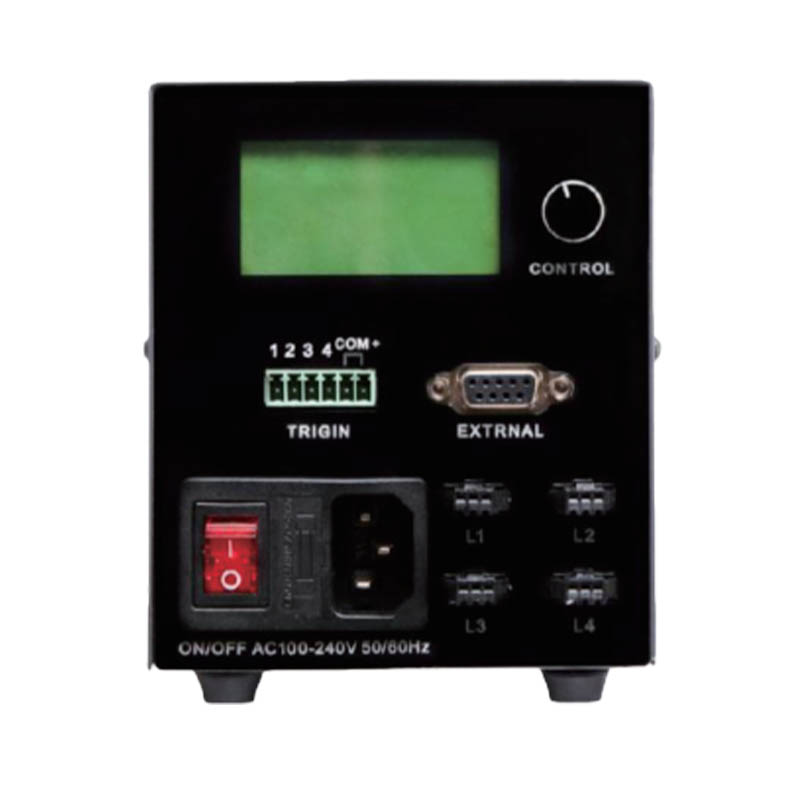
Light source controllers typically use potentiometers as variable resistors or voltage dividers, adjusting the control voltage by changing the resistance value. This voltage is input to the drive circuit or PWM control module, thereby changing the output current and achieving continuous changes in light source brightness. Because potentiometers are continuously adjustable, "stepless dimming" can be achieved, allowing a smooth transition of light output from minimum to maximum, avoiding visual discomfort or application errors caused by stepped changes.
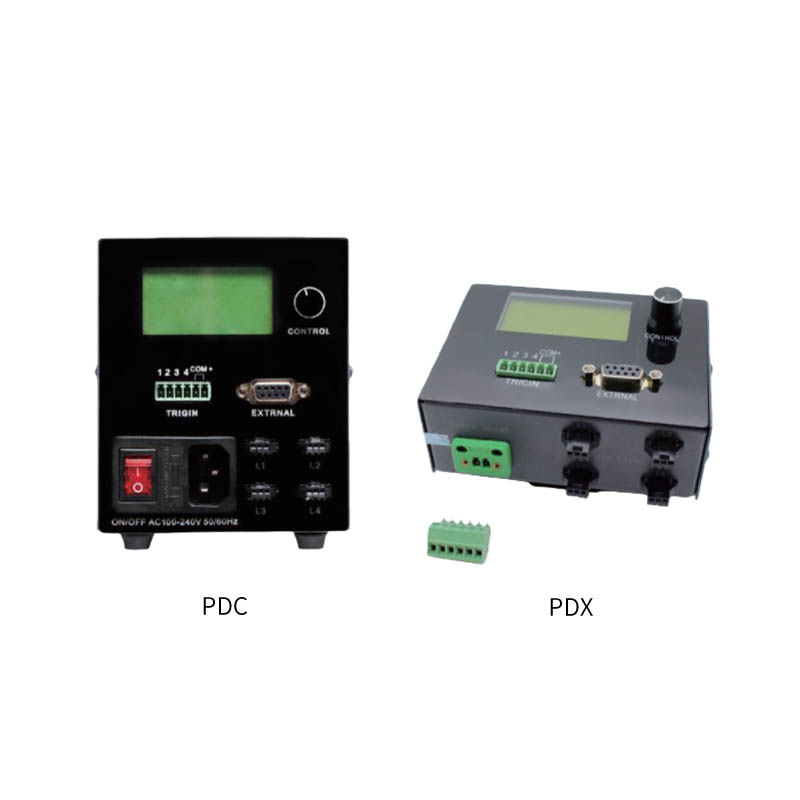
2. Implementation of Linear Adjustment Characteristics
To ensure the linearity of the adjustment process, controllers typically employ linear potentiometers or optimization algorithms combined with circuit compensation. Ideally, the potentiometer rotation angle and output voltage should have a linear relationship. However, due to the nonlinear effects of load characteristics and drive circuits, actual output deviations may occur. Therefore, some high-end controllers introduce operational amplifiers or MCUs for curve correction. Through software or analog compensation, the brightness change is made closer to the linear response curve required by the human eye or system, thereby improving control accuracy and consistency.
3. Stability Control and Anti-interference Design
In industrial environments, potentiometer signals are susceptible to electromagnetic interference, contact noise, and mechanical jitter, leading to output fluctuations. To improve stability, light source controllers typically incorporate RC filter circuits at the potentiometer input to smooth transient signal changes. Simultaneously, shielded wiring and optimized grounding reduce external interference. Furthermore, multiple sampling and averaging processes may be performed before the signal enters the control core to reduce the impact of jitter on output power and ensure stable light source brightness output.
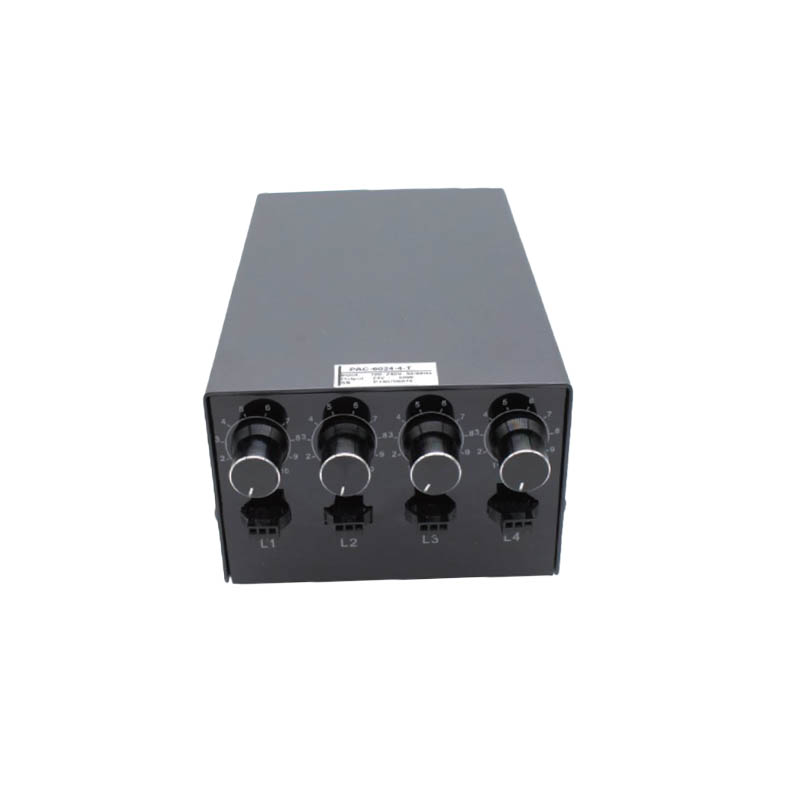
4. Synergistic Effect of Drive Circuit and Closed-Loop Control
Besides the potentiometer adjustment at the front end, the constant current drive circuit at the output is also crucial for ensuring stability. The constant current drive maintains current stability under load or temperature changes, thus preventing brightness drift. Once the potentiometer is set to a target value, the controller automatically adjusts the output through the drive circuit, bringing the actual current closer to the desired value, thus forming a "weak closed-loop" control structure. This structure ensures stepless adjustment while significantly improving long-term operational consistency.
Overall, the light source controller's stepless adjustment via potentiometer is essentially the result of the synergy between analog control and drive control. Through the combined effects of linearization design, signal filtering, and constant current drive, it not only achieves smooth and adjustable brightness output but also ensures stability and reliability in complex industrial environments.
1. The Basic Principle of Potentiometers as Analog Adjustment Inputs
Light source controllers typically use potentiometers as variable resistors or voltage dividers, adjusting the control voltage by changing the resistance value. This voltage is input to the drive circuit or PWM control module, thereby changing the output current and achieving continuous changes in light source brightness. Because potentiometers are continuously adjustable, "stepless dimming" can be achieved, allowing a smooth transition of light output from minimum to maximum, avoiding visual discomfort or application errors caused by stepped changes.
2. Implementation of Linear Adjustment Characteristics
To ensure the linearity of the adjustment process, controllers typically employ linear potentiometers or optimization algorithms combined with circuit compensation. Ideally, the potentiometer rotation angle and output voltage should have a linear relationship. However, due to the nonlinear effects of load characteristics and drive circuits, actual output deviations may occur. Therefore, some high-end controllers introduce operational amplifiers or MCUs for curve correction. Through software or analog compensation, the brightness change is made closer to the linear response curve required by the human eye or system, thereby improving control accuracy and consistency.
3. Stability Control and Anti-interference Design
In industrial environments, potentiometer signals are susceptible to electromagnetic interference, contact noise, and mechanical jitter, leading to output fluctuations. To improve stability, light source controllers typically incorporate RC filter circuits at the potentiometer input to smooth transient signal changes. Simultaneously, shielded wiring and optimized grounding reduce external interference. Furthermore, multiple sampling and averaging processes may be performed before the signal enters the control core to reduce the impact of jitter on output power and ensure stable light source brightness output.
4. Synergistic Effect of Drive Circuit and Closed-Loop Control
Besides the potentiometer adjustment at the front end, the constant current drive circuit at the output is also crucial for ensuring stability. The constant current drive maintains current stability under load or temperature changes, thus preventing brightness drift. Once the potentiometer is set to a target value, the controller automatically adjusts the output through the drive circuit, bringing the actual current closer to the desired value, thus forming a "weak closed-loop" control structure. This structure ensures stepless adjustment while significantly improving long-term operational consistency.
Overall, the light source controller's stepless adjustment via potentiometer is essentially the result of the synergy between analog control and drive control. Through the combined effects of linearization design, signal filtering, and constant current drive, it not only achieves smooth and adjustable brightness output but also ensures stability and reliability in complex industrial environments.