


How do automatic dispensing machines achieve precise processing of complex dispensing paths through multi-axis motion control?
Release Time : 2026-07-09
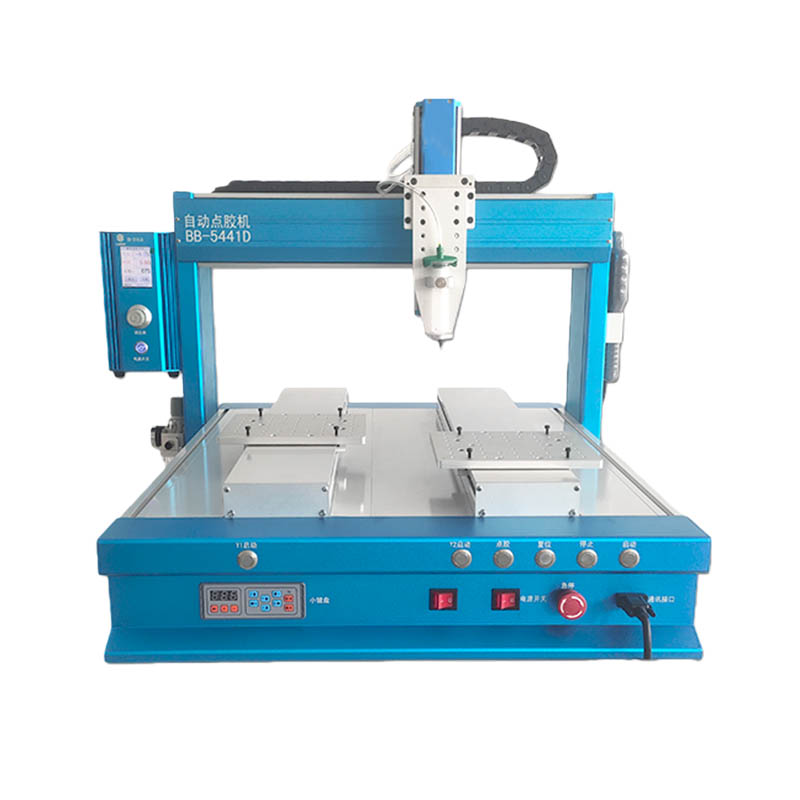
With the rapid development of intelligent manufacturing technology, electronic products, new energy vehicles, photovoltaic modules, and precision industrial equipment place higher demands on the precision and automation level of dispensing processes. Traditional dispensing methods typically rely on manual operation or simple two-dimensional motion control, which easily leads to problems such as uneven glue application, path deviation, and low processing efficiency when dealing with curved surfaces, irregularly shaped parts, and complex glue paths. Automatic dispensing machines, through multi-axis motion control systems, achieve precise positioning and flexible movement within a spatial range. They can automatically plan complex dispensing paths according to the product structure, meeting the needs of different fields for high-precision and high-consistency dispensing processing.
1. Multi-axis linkage achieves precise positioning in three-dimensional space
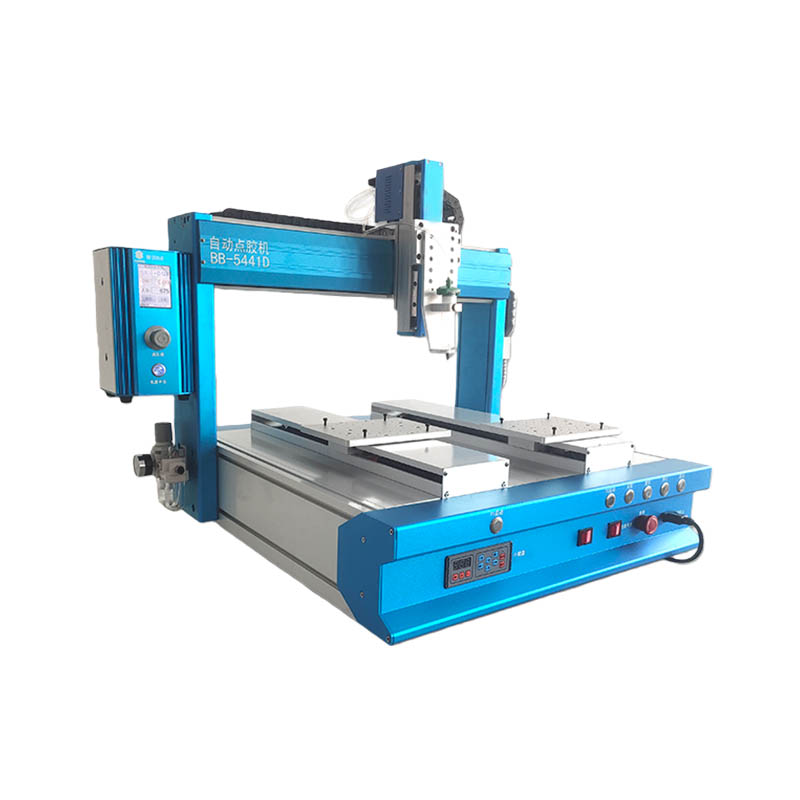
The core advantage of automatic dispensing machines lies in multi-axis motion control technology. Through the coordinated operation of multiple motion axes, the dispensing head can move precisely in three-dimensional space. Compared to traditional two-dimensional dispensing equipment that can only complete planar trajectory processing, multi-axis systems can adjust in real time according to the workpiece height, angle, and curved surface shape, achieving precise dispensing of three-dimensional structures and complex surfaces. In the manufacturing processes of new energy vehicle parts, smart wearable devices, and digital home appliances, parts often have irregular shapes. Multi-axis motion control ensures that the dispensing head always maintains the optimal working position, allowing the adhesive to evenly cover the target area, improving dispensing quality and product reliability.
2. Intelligent Path Planning Enhances Complex Graphic Processing Capabilities
To meet the dispensing needs of different products, the automatic dispensing machine can perform path planning through the control system, automatically generating complex dispensing trajectories according to preset programs. Whether it's curves, rings, mesh structures, or special irregularly shaped adhesive paths, the equipment can complete continuous processing through multi-axis linkage, avoiding path deviations caused by manual operation. Simultaneously, the system can quickly adjust motion parameters according to different workpiece sizes and structural characteristics, achieving flexible production. When product models change, only program modifications are needed for rapid switching, significantly reducing equipment debugging time, improving production line adaptability, and meeting the needs of multi-variety, small-batch manufacturing.
3. Automatic Error Correction Function Ensures Stable Dispensing Accuracy
In actual production, workpiece positioning errors, equipment operating deviations, and environmental changes can all affect the dispensing effect. The automatic dispensing machine, incorporating automatic error correction technology, can monitor the processing status in real time and adjust its motion trajectory based on feedback, effectively reducing processing errors. Through a high-precision control system, the equipment maintains consistency in glue line width, dispensing position, and glue quantity, minimizing defects caused by human error. Simultaneously, the multi-axis motion mechanism boasts high repeatability, ensuring stable long-term operation and improving overall production efficiency and product quality.
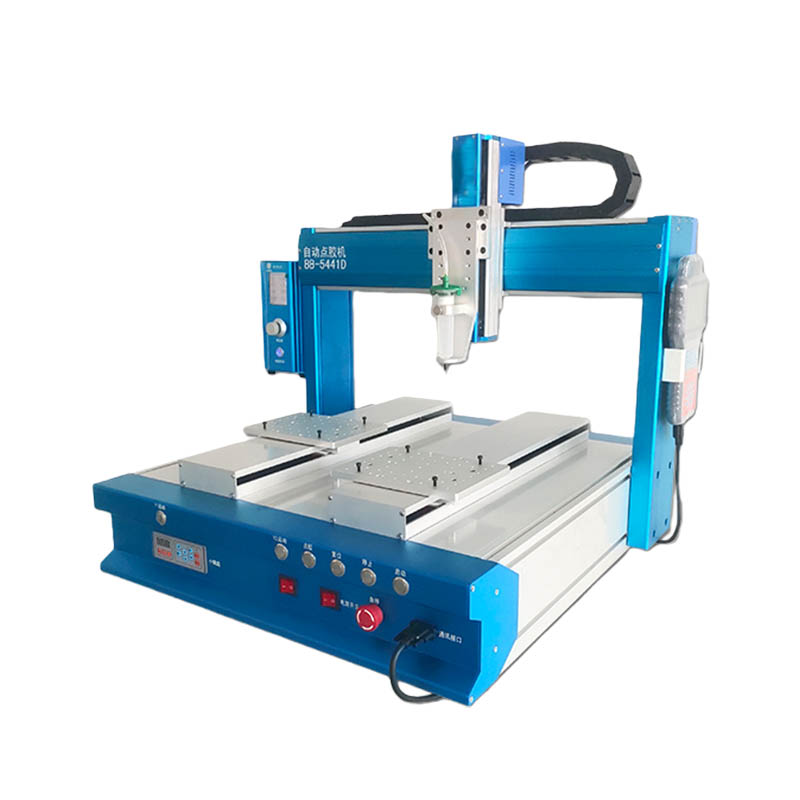
With its multi-axis precision control, intelligent path planning, and automatic error correction capabilities, the automatic dispensing machine effectively solves the dispensing challenges of complex product structures. It not only improves processing precision in fields such as new energy vehicle parts, photovoltaic equipment, and electronic components, but also drives the dispensing process towards higher efficiency, higher reliability, and greater intelligence, providing more advanced technological support for modern precision manufacturing.
1. Multi-axis linkage achieves precise positioning in three-dimensional space
The core advantage of automatic dispensing machines lies in multi-axis motion control technology. Through the coordinated operation of multiple motion axes, the dispensing head can move precisely in three-dimensional space. Compared to traditional two-dimensional dispensing equipment that can only complete planar trajectory processing, multi-axis systems can adjust in real time according to the workpiece height, angle, and curved surface shape, achieving precise dispensing of three-dimensional structures and complex surfaces. In the manufacturing processes of new energy vehicle parts, smart wearable devices, and digital home appliances, parts often have irregular shapes. Multi-axis motion control ensures that the dispensing head always maintains the optimal working position, allowing the adhesive to evenly cover the target area, improving dispensing quality and product reliability.
2. Intelligent Path Planning Enhances Complex Graphic Processing Capabilities
To meet the dispensing needs of different products, the automatic dispensing machine can perform path planning through the control system, automatically generating complex dispensing trajectories according to preset programs. Whether it's curves, rings, mesh structures, or special irregularly shaped adhesive paths, the equipment can complete continuous processing through multi-axis linkage, avoiding path deviations caused by manual operation. Simultaneously, the system can quickly adjust motion parameters according to different workpiece sizes and structural characteristics, achieving flexible production. When product models change, only program modifications are needed for rapid switching, significantly reducing equipment debugging time, improving production line adaptability, and meeting the needs of multi-variety, small-batch manufacturing.
3. Automatic Error Correction Function Ensures Stable Dispensing Accuracy
In actual production, workpiece positioning errors, equipment operating deviations, and environmental changes can all affect the dispensing effect. The automatic dispensing machine, incorporating automatic error correction technology, can monitor the processing status in real time and adjust its motion trajectory based on feedback, effectively reducing processing errors. Through a high-precision control system, the equipment maintains consistency in glue line width, dispensing position, and glue quantity, minimizing defects caused by human error. Simultaneously, the multi-axis motion mechanism boasts high repeatability, ensuring stable long-term operation and improving overall production efficiency and product quality.
With its multi-axis precision control, intelligent path planning, and automatic error correction capabilities, the automatic dispensing machine effectively solves the dispensing challenges of complex product structures. It not only improves processing precision in fields such as new energy vehicle parts, photovoltaic equipment, and electronic components, but also drives the dispensing process towards higher efficiency, higher reliability, and greater intelligence, providing more advanced technological support for modern precision manufacturing.